
How our product recommendation quiz app works
How the RevenueHunt product recommendation quiz works on Shopify and WooCommerce: from quiz answers to results page to add-to-cart. Free plan available.
The RevenueHunt product recommendation quiz asks shoppers three to seven diagnostic questions, then delivers a personalised set of product recommendations on a results page with rationale per pick. Each answer syncs to your ESP and ad platform as a custom property, so the same data powers segmented email, ads and on-site personalisation downstream.
The problem: 98% of eCommerce visitors don’t buy
You’re the owner or marketing manager of an eCommerce store, so this problem will be familiar to you. You’ve invested a great amount of time and money in driving traffic to your website. You’ve got a considerable following on social media, you’ve done content marketing, narrowed your Facebook Ads to target the ideal buyer persona, but still less than 2% of your visitors end up buying.
Let’s be honest: driving traffic to your website has become extremely expensive. Cost per acquisition is higher than ever across digital channels, and ROI on marketing spend makes it difficult to justify why you’re still pouring money into traffic acquisition.
However, there are brands that have cracked the code to eCommerce conversions and sales. Their secret: product recommendation quizzes.
The solution: guided selling
Before we get into details, think about the last time you went shopping. Let’s analyse a real example: how does your typical shopping experience go when you enter a cosmetics store?
The typical interaction between a cosmetics customer and a salesperson would go like this:
- The salesperson would ask the customer specific questions about their skin and their main concerns. Then they would listen carefully to the responses.
- During the consultation, the salesperson would give personalised feedback to the customer about how to accomplish their skincare goals.
- They would then proceed to recommend a personalised skincare routine made of products that are perfect for their skin type and condition. They would also probably incentivise them to buy the complete regimen by offering a discount if they take the whole set.
Shopping is very personal. Every customer is unique, and being engaged by a salesperson is key to a successful shopping experience. After all, the salesperson is offering a free consultation: your customer is not an expert and doesn’t know which products work best for their needs.
So why do we assume our customers know exactly what they need when they’re looking for products on your website? Online shoppers need guidance in finding what they need, just like in real shops. The underlying data category that makes this work is covered in our zero-party data guide.
A personal shopper for your eCommerce store
What if you could advise your customers by engaging them with a personal shopper experience on your website? That’s exactly what the RevenueHunt app does. It engages your customers with a product recommendation quiz, improving their product discovery experience and guiding them from start to cart.
How the product recommendation quiz works
The app engages your customer just like a salesperson would. First the quiz asks general questions. Every customer is unique, so once they respond to the first questions the quiz will start asking more specific questions targeted to them.
In the meantime, the app provides personalised feedback and tips. Once the quiz is complete, the app gives personalised product recommendations along with a story around why the recommended products are perfect for that shopper.
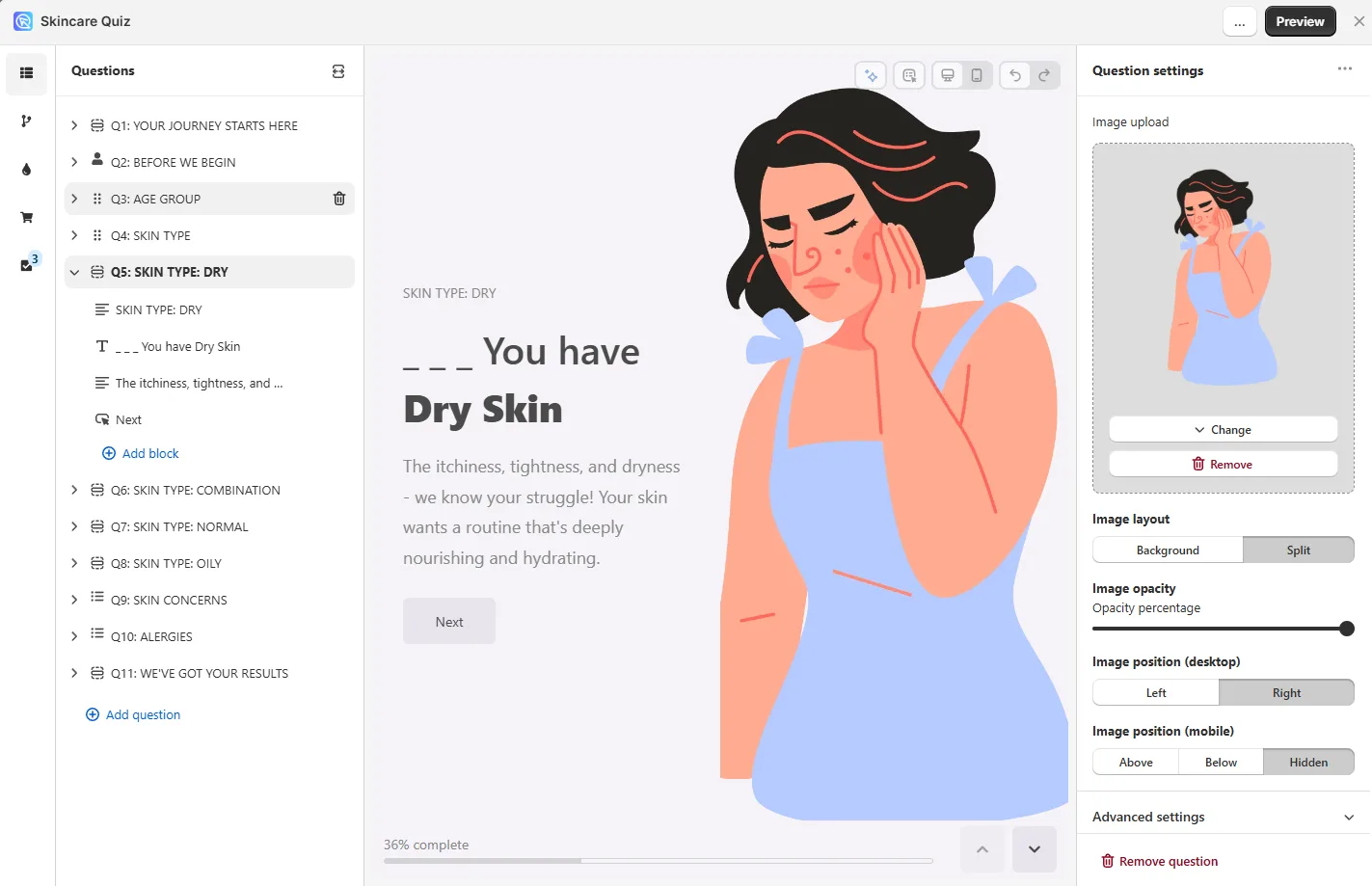
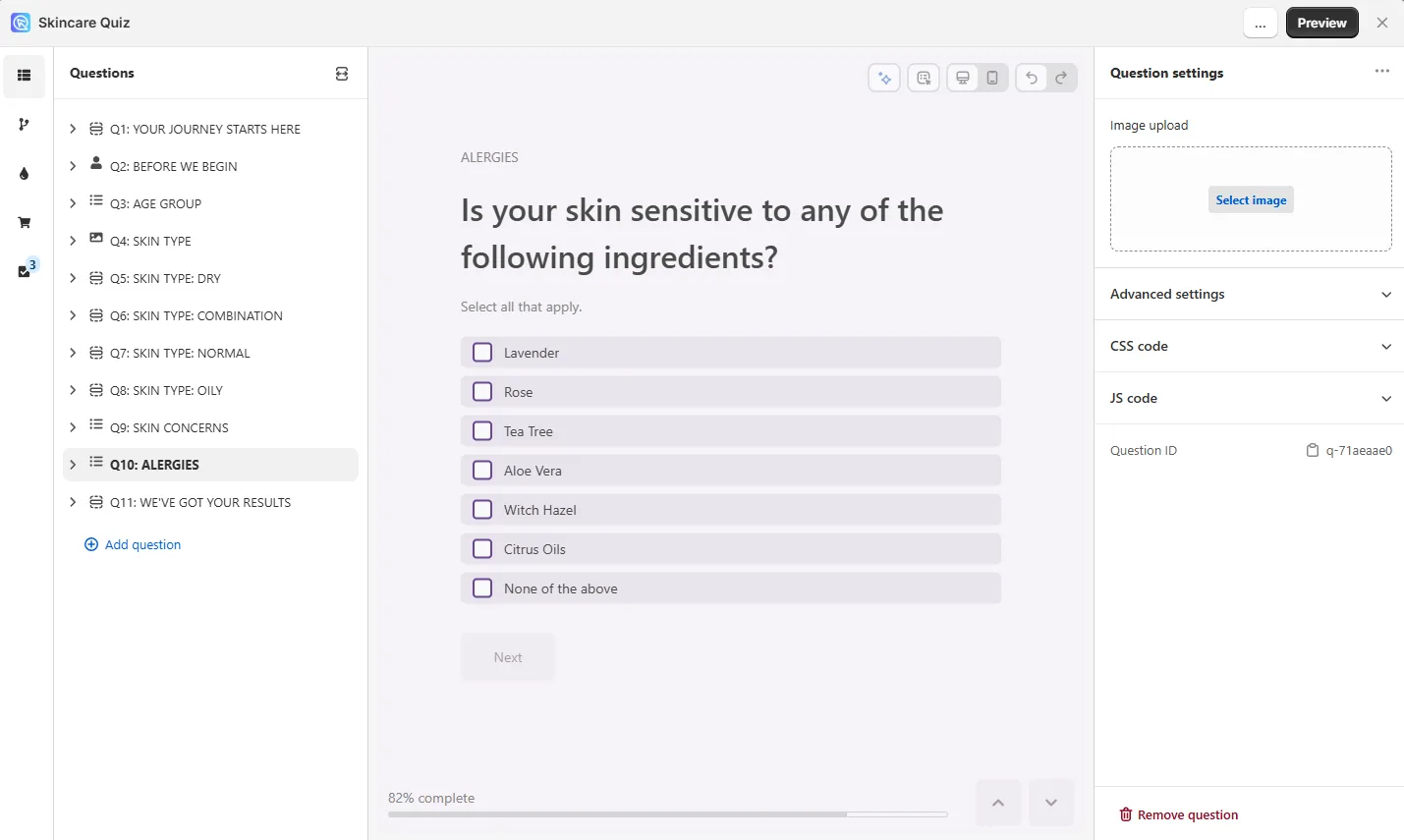
Personalise the questions you ask to guide your customers throughout their shopping experience.
Check out a demo version to see how it works:
Customising the quiz to your specific needs
Just like every customer is unique, we believe every brand has its own personality. The app includes sample quiz templates you can use for inspiration, but you’ll probably want to edit it to match your brand’s design and communication guidelines.
The app lets you customise multiple aspects of the quiz. With the easy-to-use editor you can:
- Customise the questions you ask
- Personalise the feedback you give
- Choose from multiple fonts and colour palettes
- Add a background image to your quiz
- Add custom CSS code to your design
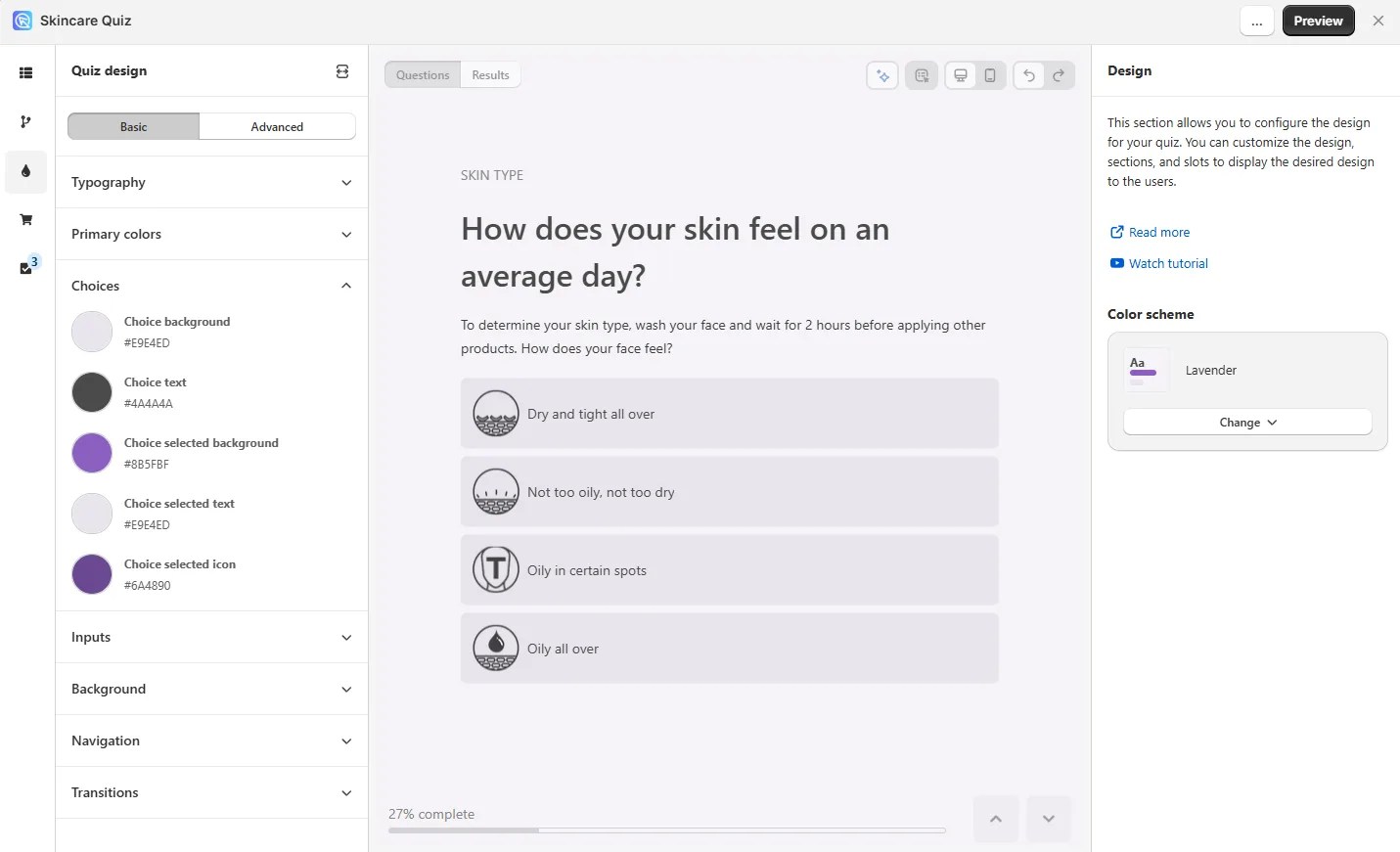
Customise the quiz’s design to match your eCommerce’s look and feel.
Some of the key features include
Quiz Copilot. A smart AI assistant that can build and adapt the quiz for you in seconds from a single prompt.
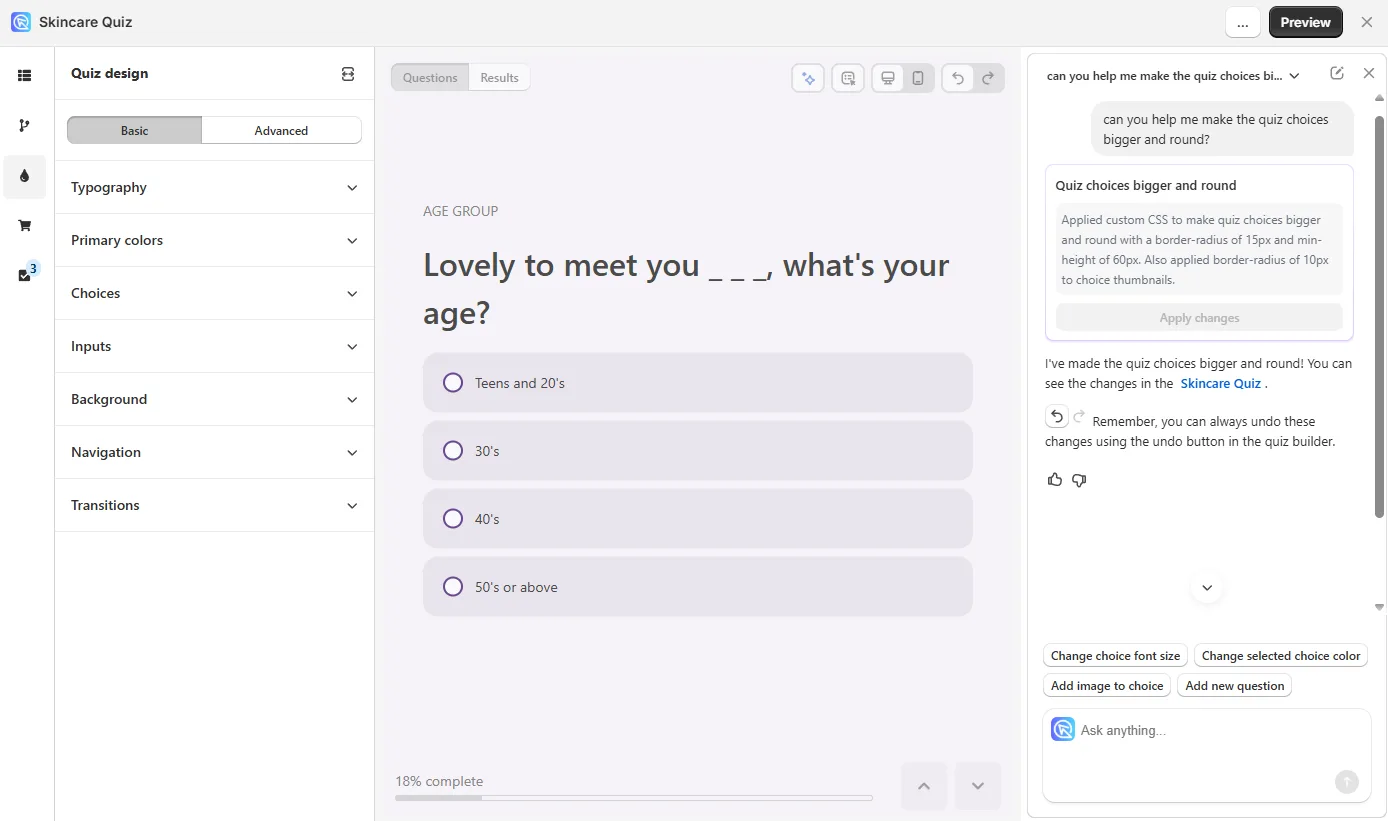
Quiz Copilot assists you in any step of the quiz-building journey: from drafting to publishing.
Plug and play. Easy to install and configure. No coding required. Sell more effectively within days, not weeks. Choose between multiple display modes (link popup, inline quiz, automatic popup, chat icon).
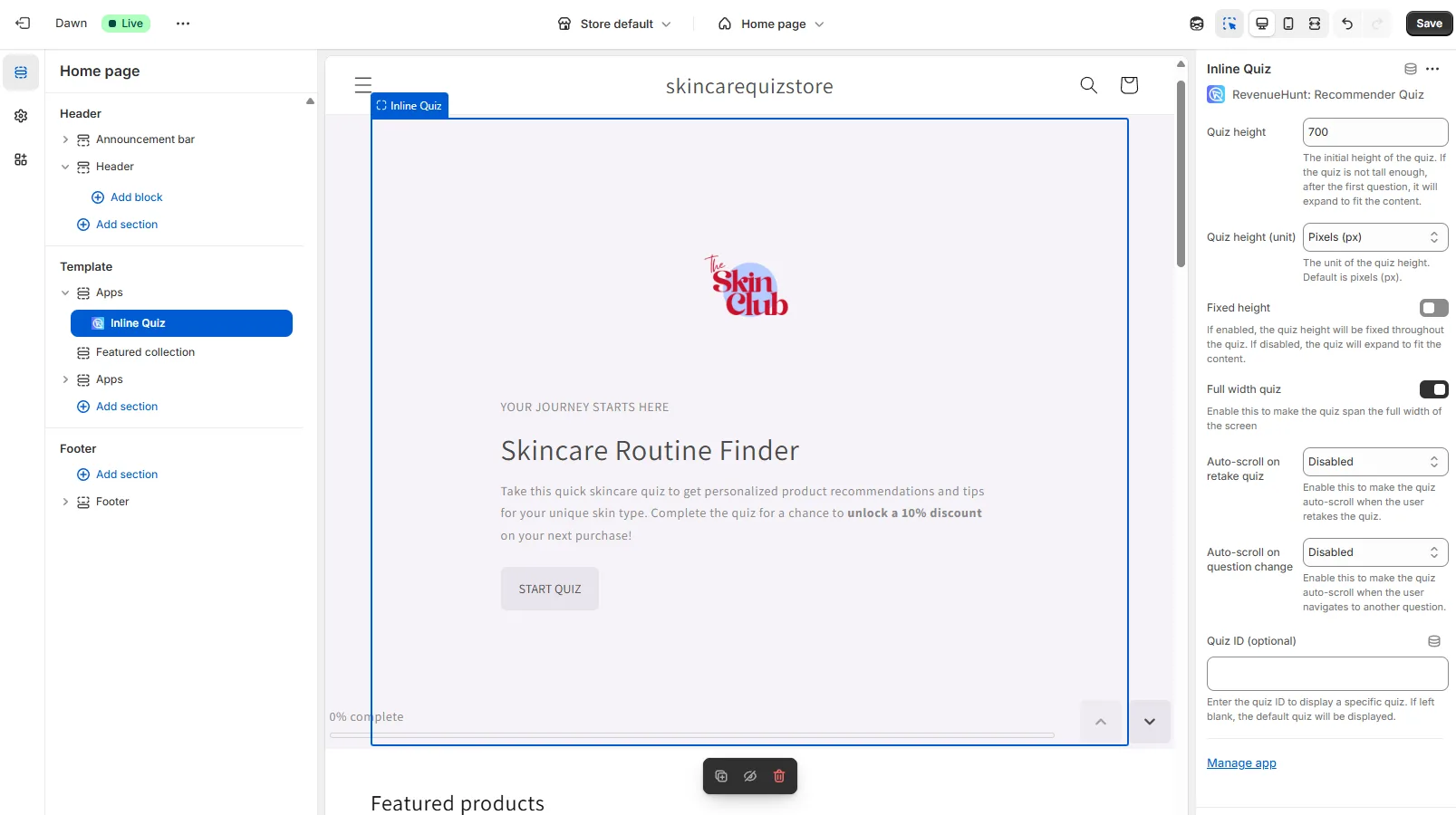
Easy to install: embed it directly from your theme.
Conditional logic. This feature lets you display different questions based on your customer’s previous answers. With conditional logic you can define rules that automatically skip irrelevant questions, leading to higher quiz completion rates, more conversions and more sales.
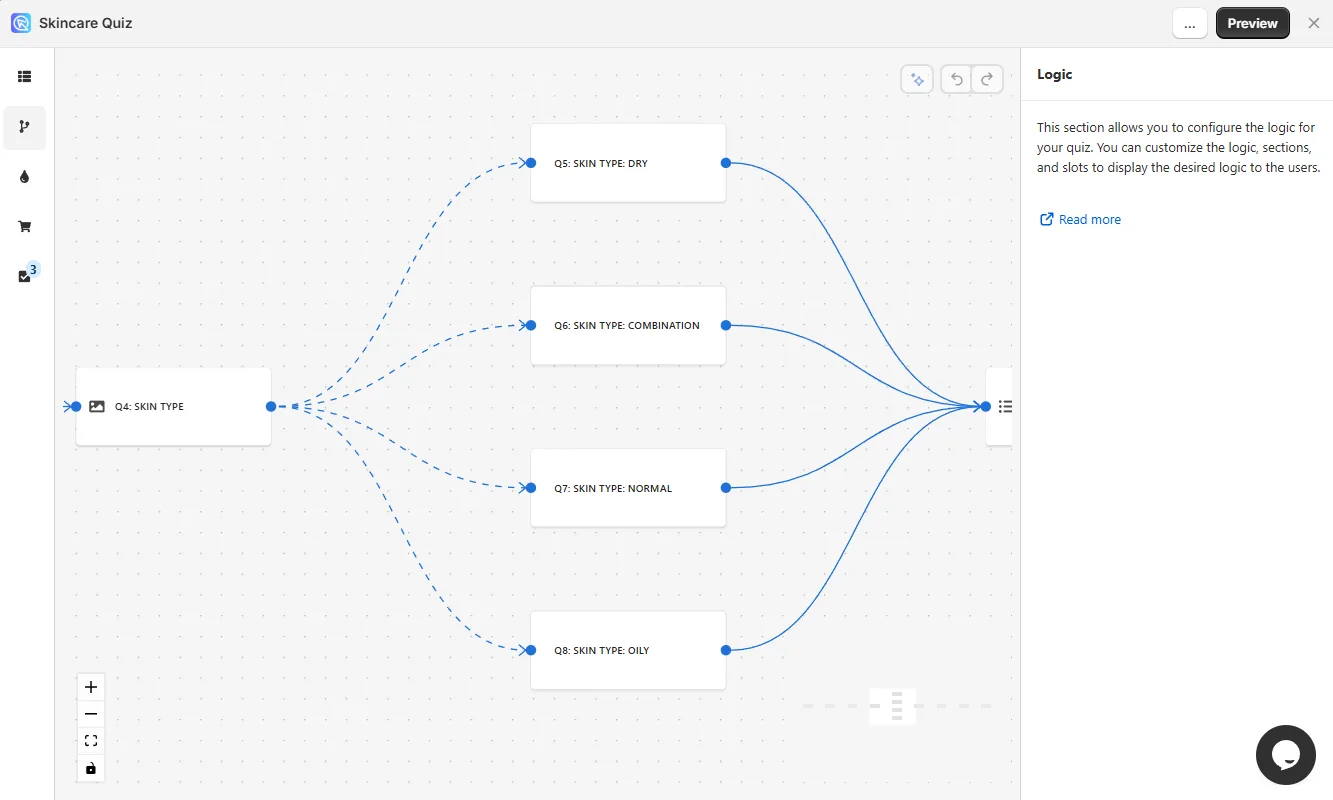
Set conditional rules to skip irrelevant questions.
Product category slots. There are many product categories you might want to recommend simultaneously. This feature is useful if you want to recommend product bundles. For example, if you’re a cosmetics store you might want to recommend a complete skincare routine (cleanser, toner, serum, moisturiser…).
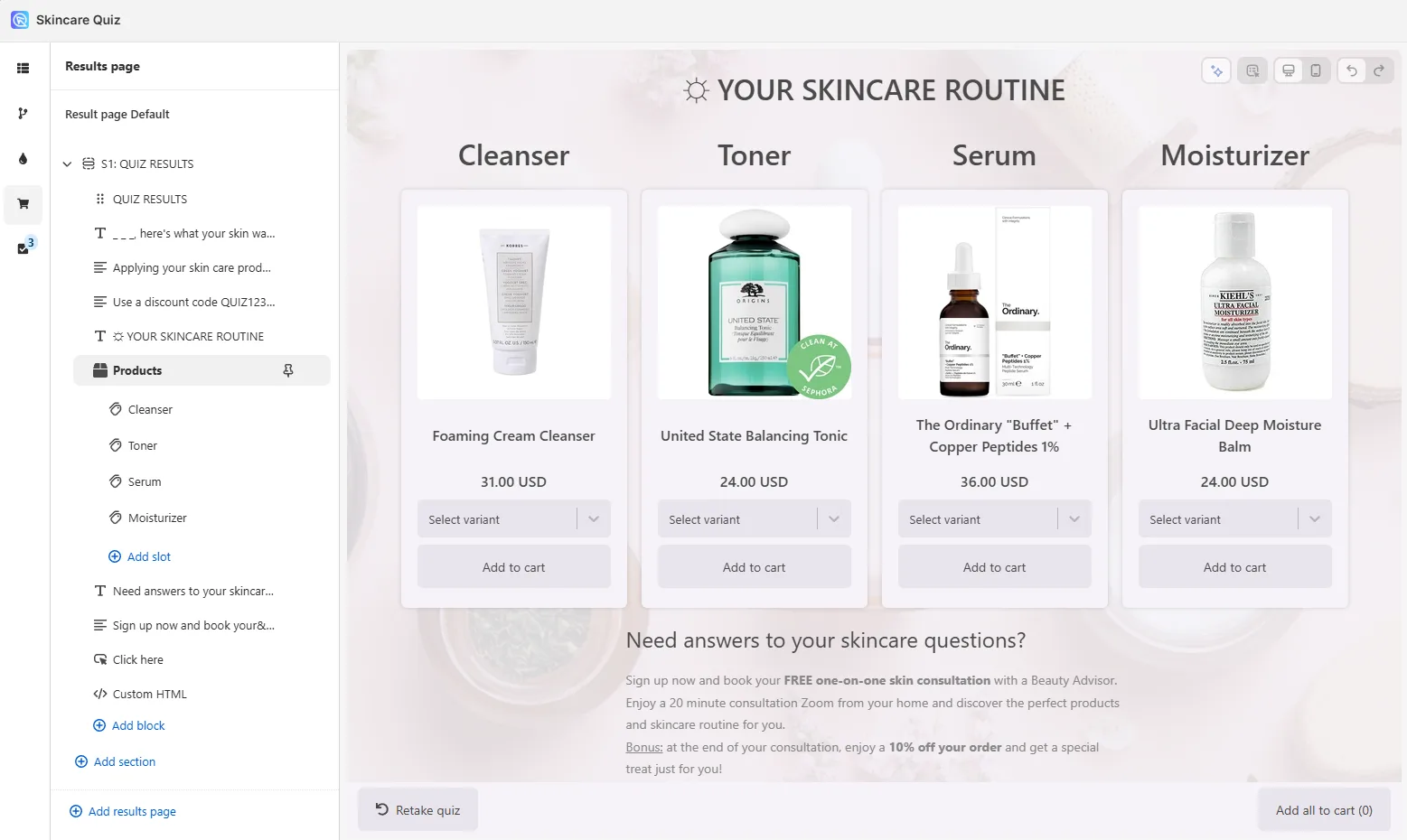
Slots allow you to group product recommendations into different categories.
Lead capture. Incentivise customers to leave their contact details (email or phone number) in exchange for a discount on their purchase, so you can follow up or retarget them with ads. For the consent mechanics, see how to ask for marketing consent inside a quiz.
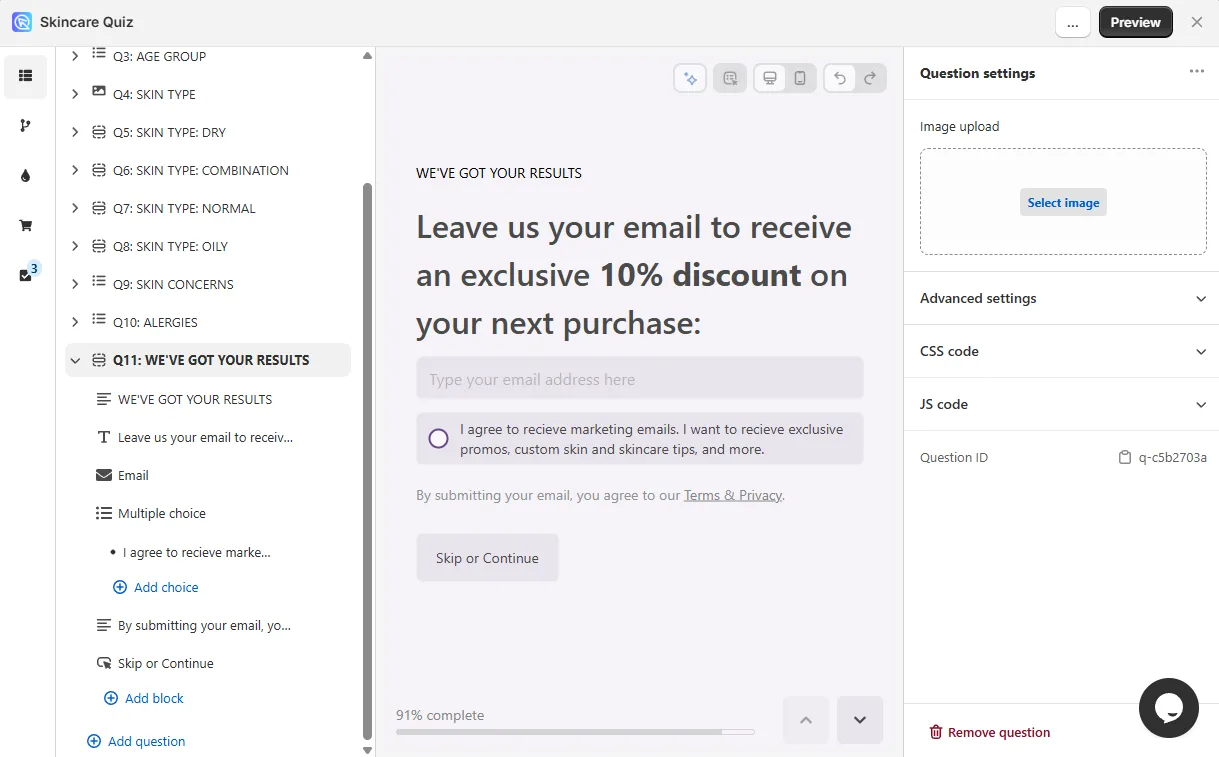
Optionally, set up your quiz to capture leads and retarget your customers.
Email notifications. Receive an email every time a potential customer leaves their contact details so you can follow up. The customer also receives a personalised email with their results in their inbox. They can come back to the quiz later to finish the purchase if they haven’t made up their mind yet.
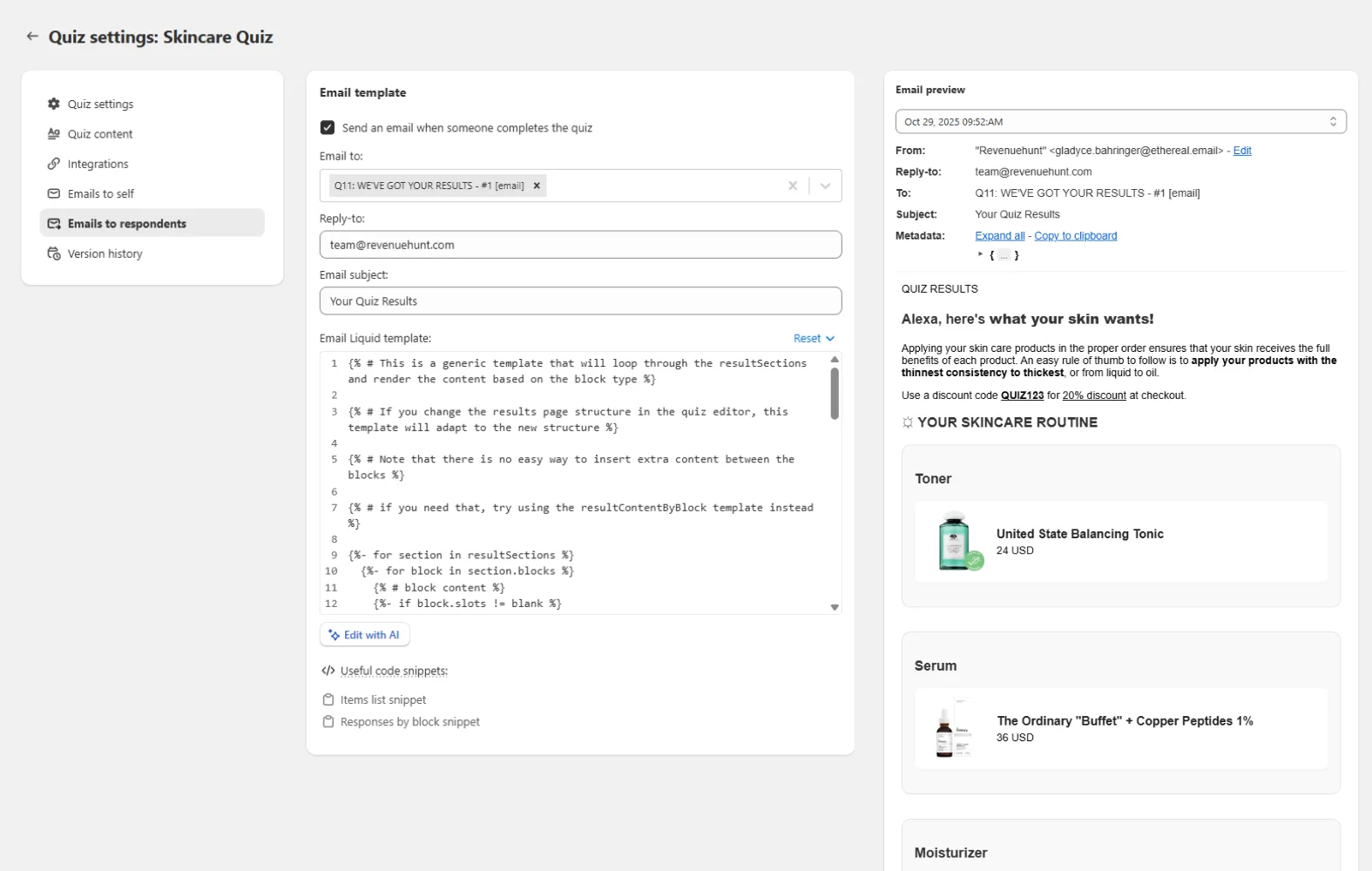
Integrations for retargeting. Send captured leads automatically to Klaviyo, Omnisend, HubSpot, Mailchimp, or connect to any other mailing list via Zapier. See the full list of integrations. For the activation side, see how Klaviyo segmentation unlocks once zero-party data lands in profiles.
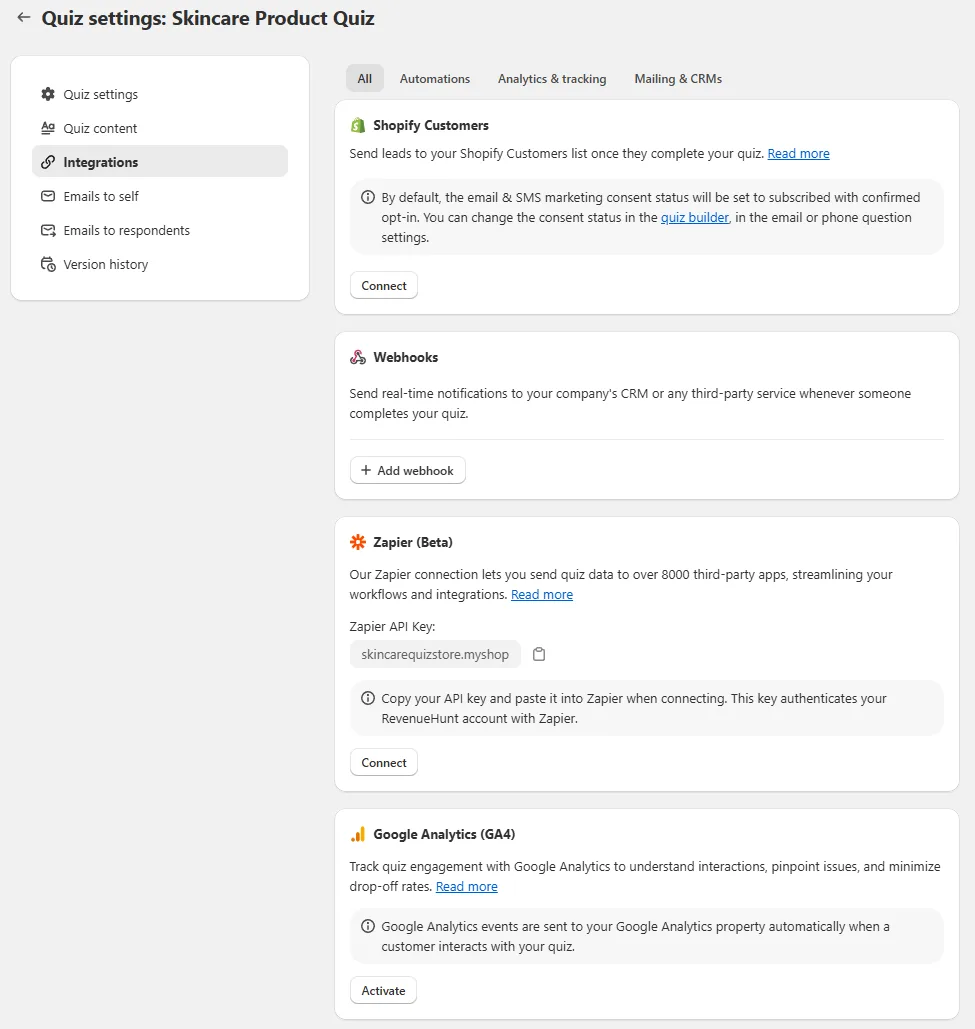
Automate your workflow by sending quiz results directly to your CRM.
Actionable insights. Through quiz metrics and integrations like Google Analytics and Meta Pixel, gain insights into consumer behaviour and product preferences to drive conversions and profitability. For the boundary between in-app analytics and your other systems, see how quiz analytics compares to GA4 and the Meta pixel.
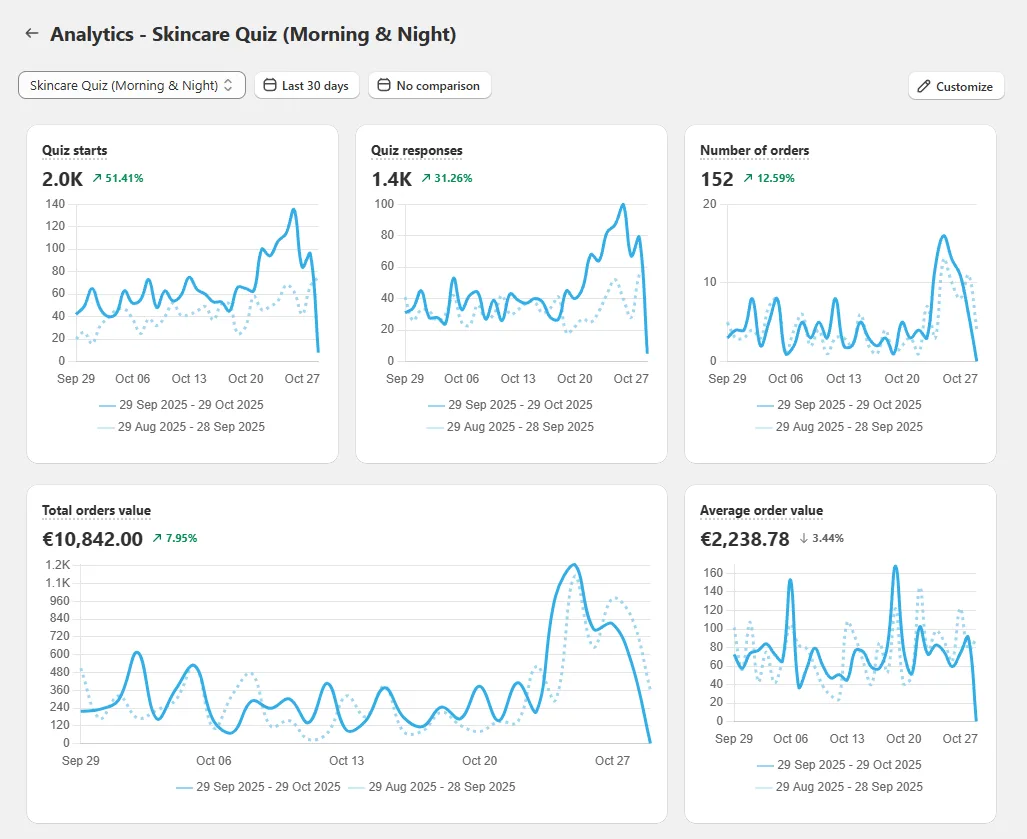
Check quiz performance directly in the app.
Case studies
The RevenueHunt app powers product discovery across many eCommerce stores. Across categories, stores using product recommendation quizzes routinely report:
- Conversion rate lifts from ~2% to 5%+
- AOV up by ~20% with routines and bundles
- More qualified email growth (higher open and click rates)
Explore our customer stories and testimonials to see how brands like yours use guided selling to grow faster.
A few stories worth reading first:
- How a US anti-aging device brand achieved 42.64% AOV lift and $691K in 90 days
- Extreme Kids World case study: quiz-driven discovery for high-energy families
- Daughterela case study: quiz-driven personalisation for natural beauty
For 11 funnel examples across the broader DTC market, see our 11 ecommerce sales funnel examples roundup.
Quick start (3 steps)
- Create. Pick a template (skincare, size, gifting, nutrition) and tailor 5-8 high-intent questions with conditional logic.
- Connect. Map answers to products, variants or collections. Configure bundles and slots to recommend full routines or sets.
- Publish. Embed inline, trigger as a popup, or link from menus and ads. GA4 and Meta Pixel tracking works out of the box.
Flexible embed options
Bring your quiz wherever shoppers engage most:
- Inline section on landing, collection, or blog pages
- Popup / modal on exit intent, time delay, or button click
- Chat-style launcher for persistent discovery on PDPs
- Standalone link for email, social or ads (great for cold traffic)
Performance and compliance
Modern stores demand both speed and trust. The quiz is engineered for Core Web Vitals and GDPR compliance out of the box.
- Lightweight loader minimises CLS and keeps pages fast
- Consent-aware GA4 and Meta Pixel respect your CMP
- Privacy-first zero-party data with clear opt-in; export or delete on request
Use cases by vertical
| Vertical | Use case |
|---|---|
| Skincare and beauty | Build routines by skin type, concerns, actives and sensitivity; show usage tips to reduce returns. |
| Apparel | Size finder (fit preferences, key measurements) with variant-level recommendations and “why this size”. |
| Nutrition | Goals, dietary restrictions, schedule; recommend stacks and subscription options. |
| Gifting | Quick, guided flows for budget, recipient and occasion. |
Integrations
- Analytics and ads. Google Analytics (GA4) and Meta Pixel; events like
quiz_started,question_viewed,results_viewed,recommended_add_to_cartfor attribution and retargeting. - ESP / CRM. Klaviyo, Omnisend, Mailchimp, HubSpot; sync profiles, quiz answers and recommended products to trigger segmented flows.
- Automation. Zapier and webhooks; push responses to your data warehouse, CDP or internal tools.
Frequently asked questions
How do I build a product quiz in Shopify?
Install the app, pick a template, add your questions, and link choices to products or collections. Publish as an inline section, popup, or embed. No code required — most merchants launch in under 15 minutes.
How do I build a product quiz in WooCommerce?
Install the plugin, choose a template, customise 5-8 high-intent questions with conditional logic, then map answers to products, variations, or categories. Publish on a page, as a popup, or via a link.
Is there a free quiz builder?
Yes. The free plan supports a fully functional quiz with core features. When you outgrow monthly response limits, upgrade without losing data.
What's the best quiz funnel to increase AOV?
Keep it focused (5-8 questions), optionally collect email before results, then show 3-5 tailored products with badges, bundles or slots, and variant selectors. Add cross-sells on the results page and pass UTMs for clean GA4 attribution.
Does it integrate with Klaviyo, GA4, and Meta Pixel?
Yes. Quiz answers and recommendations sync to Klaviyo for segmented flows. GA4 and Meta Pixel receive key events like quiz_started, question_viewed, and results_viewed for attribution, audience building, and campaign optimisation.
What's the best skincare quiz setup?
Use the skincare template: capture skin type, concerns, sensitivity or ingredients, and routine goals. Map to cleansers, serums and moisturisers, then display a routine with usage tips and add-to-cart to lift LTV and reduce returns.
Can I build a size quiz?
Yes. Ask fit preferences and key measurements, match to variants and size charts, and output a recommended size with a short “why this size” rationale to boost purchase confidence.
Most shoppers leave because they can't find the right product