
Product quiz for headless ecommerce
Headless or custom-frontend ecommerce store? The RevenueHunt Standalone quiz embeds anywhere, captures zero-party data and recommends products.
If you’re running a headless ecommerce store (Shopify Hydrogen, Next.js Commerce, a custom React frontend over a Shopify or BigCommerce API, or a fully bespoke build), most product recommendation quiz apps don’t work out of the box: they assume they’re embedding into a templated theme, not a custom frontend. That breaks ecommerce personalisation at the moment shoppers are most engaged. The RevenueHunt Standalone version of the Recommender Quiz solves this. It’s the same quiz engine that powers our Built for Shopify, WooCommerce, Magento and BigCommerce versions, with one key difference: it integrates into any frontend via a single JavaScript snippet, syncs products via Google Product Feed, and runs entirely independently of any storefront platform. On a standard WooCommerce store, the WooCommerce product recommendation quiz plugin is the better fit.
What you'll learn
- 01Why headless ecommerce setups break most quiz apps, and what the RevenueHunt Standalone version does differently.
- 02Nine use cases beyond traditional Shopify stores (affiliate sites, course platforms, brick-and-mortar, subscription boxes).
- 03The four-step install process for Standalone, including Google Product Feed product sync.
- 04How zero-party data and Klaviyo segmentation work on Standalone vs the Shopify-native versions.
Table of contents:
- What headless ecommerce changes
- The Standalone Recommender Quiz: how it differs
- Use cases beyond Shopify
- How to install the Standalone quiz
- Frequently asked questions
- Where this fits
What headless ecommerce changes
Headless ecommerce decouples the frontend (what customers see) from the backend (where orders, inventory and checkout live). The frontend can be Next.js, Astro, Hydrogen, Nuxt or a fully custom build; the backend can be Shopify, BigCommerce, commercetools or a bespoke commerce API. The two communicate via APIs.
Adoption sits somewhere in the high-teens of the ecommerce market depending on which research you read. Large brands like Nike, Lululemon and LEGO run headless setups, and a steady stream of mid-market stores are migrating because the performance, flexibility and time-to-market wins compound. The flip side is that every app that used to “just drop in” via a theme block now needs an integration path that doesn’t depend on the theme layer.
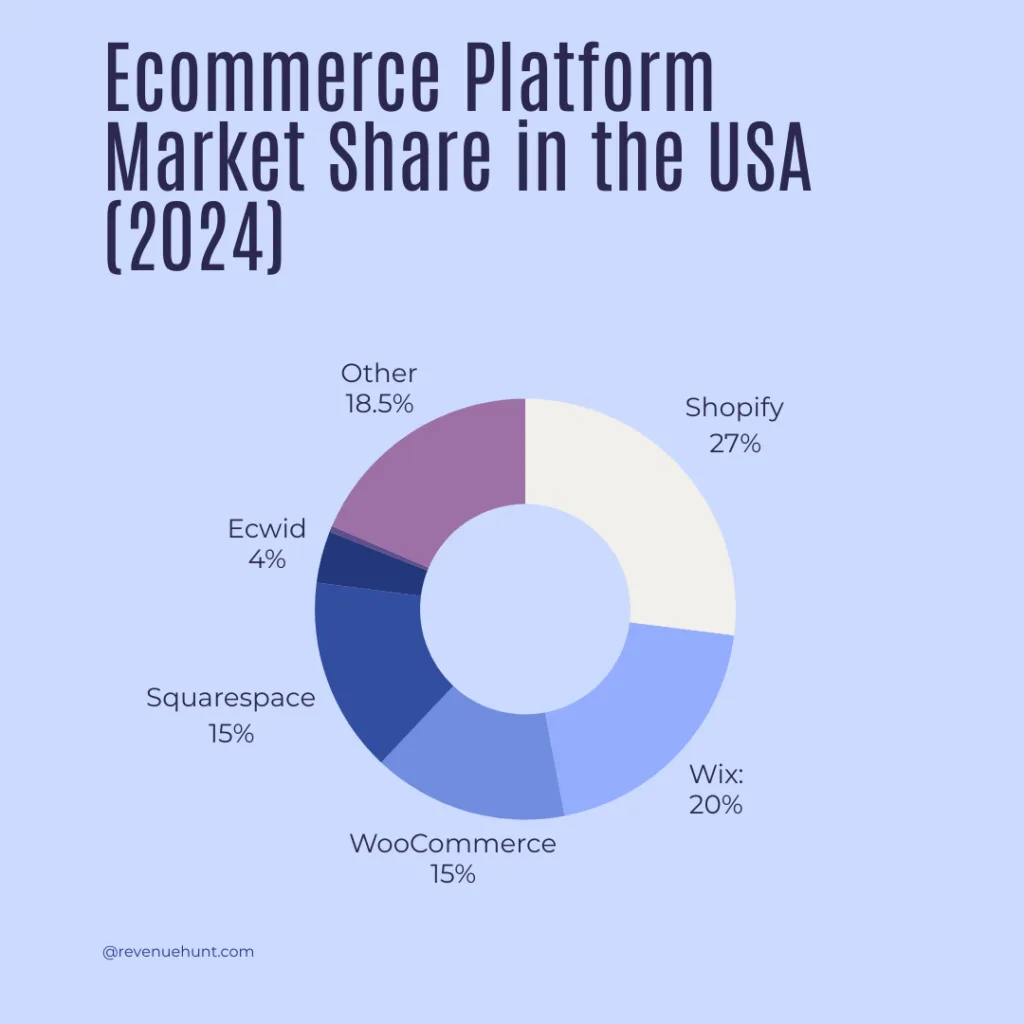
Fig. 01 Templated quiz apps assume a Shopify or WooCommerce theme exists to hook into. Headless storefronts have no theme; the Standalone version embeds via a single JS snippet anywhere on the frontend.
Why operators choose headless
The benefits compound for any brand that’s outgrowing a one-size-fits-all template:
| Benefit | What it actually means in practice |
|---|---|
| Flexibility | Frontend and backend evolve independently. Redesign the storefront without re-platforming. Add a new sales channel (mobile app, voice, in-store kiosk) against the same backend. |
| Performance | Modern frontend frameworks (React, Vue, Astro, SvelteKit) hit Core Web Vitals targets the templated themes struggle with, especially on mobile. See more speed equals more sales for why this matters. |
| Omnichannel | A single backend serves web, mobile app, in-store and social commerce surfaces consistently. The customer's cart and account follow them across channels. |
| Time to market | Frontend changes ship without backend deploys. A copy or layout change is a Git PR, not a theme migration. |
| Personalisation | Custom frontend code can react to user signals (referrer, location, prior session, quiz responses) in ways templated themes can't easily. |
Why operators sometimes regret it
Headless isn’t free. Initial setup costs are higher because you’re building frontend code instead of installing a theme. Every third-party tool that assumed a templated storefront now needs an integration path. SEO, analytics consent, accessibility and security all need to be implemented (templated themes ship most of this by default).
Product recommendation quizzes are one of those tools. Most quiz apps in the Shopify app store install via the Shopify theme editor, which doesn’t exist on a headless store. Standalone solves the integration gap.
The Standalone Recommender Quiz: how it differs
The Standalone version of the RevenueHunt: Recommender Quiz is the same quiz engine that powers our Built for Shopify, Shopify Legacy, WooCommerce, Magento and BigCommerce versions. The differences are integration and product-sync mechanics:
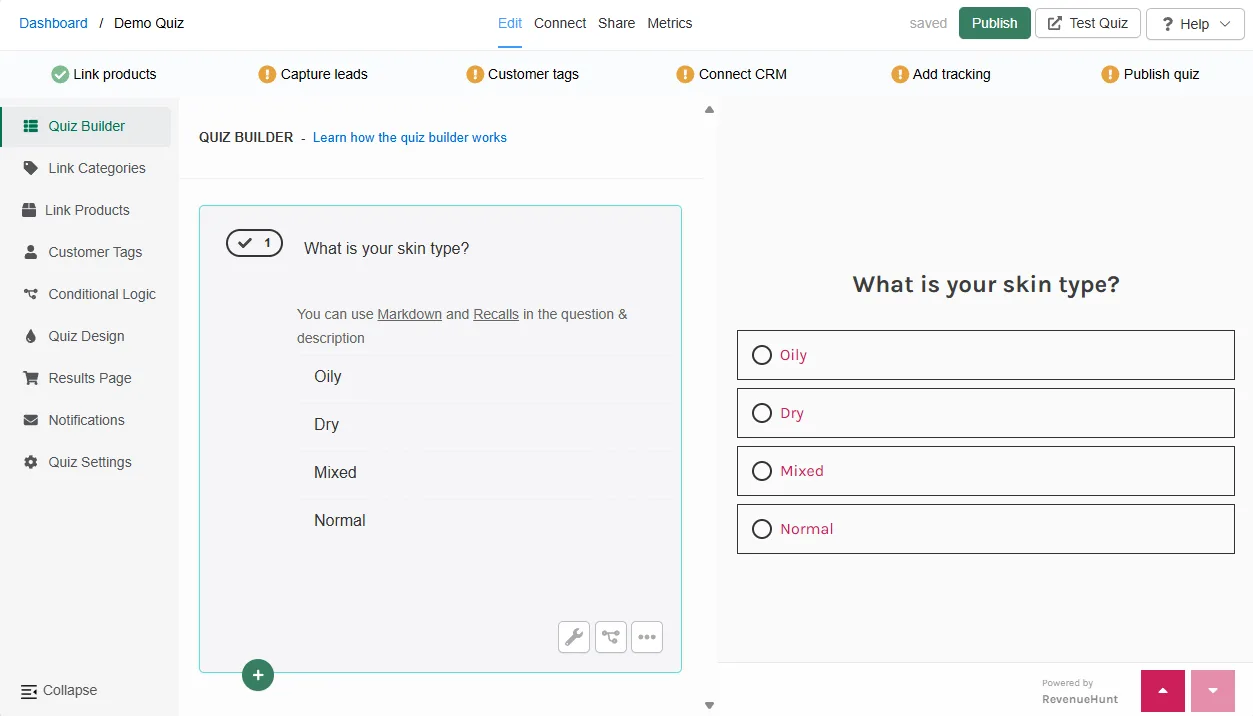
Fig. 02 The Standalone Quiz Builder. Same question flow editor and choice settings as the Shopify and WooCommerce versions, accessed via a web dashboard instead of an admin app.
Free plan covers up to 100 quiz responses per month with every feature unlocked.
Embeds via a single JavaScript snippet. Drop a script tag anywhere in your headless frontend (Next.js page, Astro layout, custom React route, plain HTML) and the quiz renders inline. No theme block, no iframe wrapper, no platform-specific install path.
Product sync via Google Product Feed. Instead of pulling products from a Shopify or WooCommerce admin, Standalone reads your Google Merchant feed. Upload products manually for small catalogues, or point it at your existing feed URL for catalogues that already sync to Google Shopping. Every quiz answer maps to specific products or product collections from the feed.
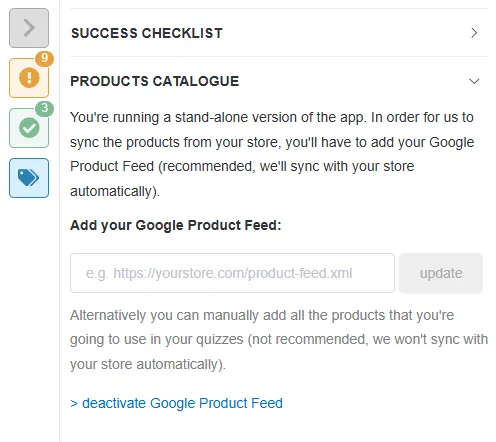
Fig. 03 Standalone syncs the catalogue via a Google Merchant Center feed. Same product data Google Shopping already has; no platform-specific admin required.
Same zero-party data flow. Every quiz response captures the same structured data the Shopify and WooCommerce versions capture, syncs to Klaviyo via the native integration, and feeds the same segmented email flows. See how Klaviyo segmentation unlocks once zero-party data lands in profiles for the activation chain. Segmented Klaviyo campaigns earn over 3x the revenue per recipient of generic sends (Klaviyo segmentation benchmark).
Same Quiz Builder. Same question types, same recommendation algorithm, same customer-tag system, same results-page editor as the platform-native versions. If you’ve used RevenueHunt on Shopify before, the Standalone version is the same product with a different integration path.
Use cases beyond Shopify
Standalone exists because the customer base for a product recommendation quiz is much wider than just “stores on Shopify”. Ten use cases we see regularly:
Affiliate stores. Display custom product images and affiliate links from anywhere on the web. The quiz routes the customer to the right partner-merchant link based on their answers, capturing email and zero-party data in the process.
Sites without ecommerce capability. Course platforms, coaching sites, agencies, SaaS landing pages. The quiz isn’t recommending products to buy on-site; it’s recommending which programme, package or content matches the visitor.
Custom-built storefronts. Anything running on a non-Shopify, non-Woo, non-Magento stack: a Next.js site over a bespoke commerce API, a static Astro site with Stripe checkout, a WordPress site without WooCommerce.
WordPress sites avoiding WooCommerce. WordPress installations that prefer not to run the full WooCommerce stack can still surface a recommendation quiz that routes to external purchase pages.
Brick-and-mortar stores. Tablet kiosks running the quiz in-store. The customer takes a 60-second consultation on the kiosk, the recommendation prints to a slip the sales associate uses to gather products, and the customer’s email gets captured for the post-purchase flow.
Membership-based sites. Recommend tiers, content modules or services to members based on stated preferences, refreshed quarterly as the customer’s needs change.
Niche retailers. Specialty stores in narrow verticals (e.g. fermentation supplies, vintage watches, specialty teas) where category browsing produces choice paralysis and a guided consultation routes the customer to the right SKU in 90 seconds.
Educational platforms. Recommend courses based on the student’s stated goals, current skill level and learning style. Often runs as an onboarding step for new account holders.
Subscription box services. Personalise the contents of each subscription box based on the customer’s answers, with periodic re-quiz prompts to keep the recommendations current.
Healthcare and wellness. Recommend personalised plans, supplements or services based on health profile and goals. Requires careful consent and data-protection design, which Standalone supports natively via the consent flow built into the quiz.
How to install the Standalone quiz
-
Sign up. Visit the RevenueHunt sign-up page and create an account.
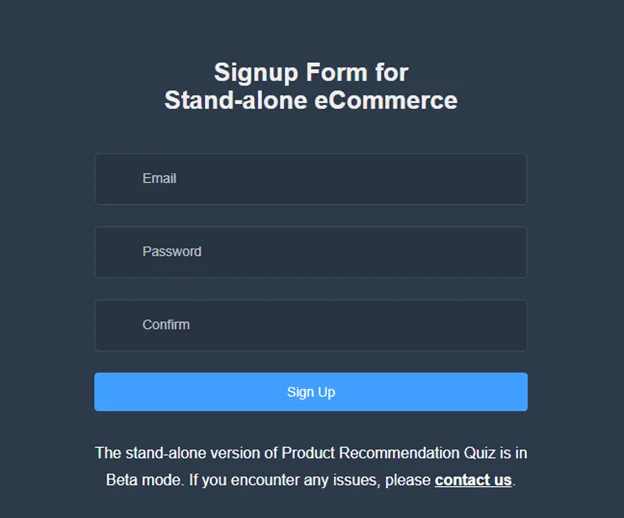
Fig. 04 The RevenueHunt dashboard sign-up page. Creates a Standalone account in under a minute; the Free plan covers 100 quiz responses per month with every feature unlocked.
-
Set up your quiz. Log in to the RevenueHunt dashboard, create a new quiz, design it to match your brand, write the questions and define the answer choices. For the design principles that produce a high-converting quiz, see how to build a successful product recommendation quiz.
-
Add products. Either upload products manually for smaller catalogues, or connect a Google Product Feed from Google Merchant Center for catalogues that already sync to Google Shopping. Map each quiz answer to specific products or collections.
-
Embed and launch. Copy the JavaScript snippet from the dashboard and paste it into the page on your headless frontend where the quiz should appear. Publish the quiz and start collecting responses.
Frequently asked questions
Does RevenueHunt work on a headless ecommerce store?
Yes, via the Standalone version of the Recommender Quiz. It embeds into any frontend (Next.js, Astro, Hydrogen, Nuxt, custom React, plain HTML) via a single JavaScript snippet, with no dependency on a Shopify theme or WooCommerce template. The quiz engine, question types and Klaviyo integration are identical to the platform-native versions.
How does Standalone handle product data without a Shopify or WooCommerce admin?
Products are synced from a Google Product Feed (the same feed you’d use for Google Shopping). For smaller catalogues, you can add products manually inside the RevenueHunt dashboard. Each quiz answer is then mapped to specific products or product collections from the feed, exactly like the Shopify-native versions map answers to admin products.
Will the quiz still capture zero-party data on Standalone?
Yes, identically to the Shopify and WooCommerce versions. Every response captures the customer’s stated preferences as structured data, syncs to Klaviyo via the native integration, and feeds the same segmented email flows. Segmented Klaviyo campaigns earn over 3x the revenue per recipient of generic sends, regardless of whether the quiz runs on Shopify, WooCommerce, or Standalone.
Can I use customer tags on Standalone?
Yes. The Customer Tags feature works identically to the Shopify Legacy / WooCommerce / Magento / BigCommerce versions: a dedicated Customer Tags section in the Quiz Builder with a per-choice input bar. See how to use customer tags in product quizzes for the full walkthrough.
Is there a free plan?
Yes. The Free plan covers up to 100 quiz responses per month with every feature unlocked, including the Klaviyo integration, custom CSS / JavaScript, and the full Quiz Builder. The paid plans lift the response cap and add a few advanced features (priority support, additional team seats).
Where this fits
Headless ecommerce adoption is steady and growing because the performance, flexibility and time-to-market wins compound across every customer-facing surface. The trade-off is that everything that used to be a one-click theme install now needs an integration path. For product recommendation quizzes specifically, the Standalone version of the RevenueHunt: Recommender Quiz is the path: same engine, same Klaviyo integration, same zero-party data flow, embedded via a single JavaScript snippet anywhere.
For the foundations of the quiz itself, see how to build a successful product recommendation quiz. For the data category the quiz captures, see our zero-party data guide. For concrete examples of zero-party data mechanisms across real brands, see 12 zero-party data examples. For the activation chain into segmented flows, see how Klaviyo segmentation unlocks once zero-party data lands in profiles. For the consent-design playbook for any quiz including Standalone, see marketing consent in a product quiz.
Get the Standalone Recommender Quiz and start your first headless quiz funnel today. Free plan available.
Free tools & data
Put these benchmarks to work on your own store.
Free tool
Quiz ROI calculator
Estimate the extra revenue and ROI a product recommendation quiz could add to your store. Built on real data, no email required.
Calculate your ROIFree report
Ecommerce quiz benchmark report
How product recommendation quizzes really perform: conversion by category, AOV uplift, and completion, from 45M+ real quiz responses.
Read the report
Most shoppers leave because they can't find the right product