
Klaviyo zero-party data: from empty list to +267% RPR
How quiz-driven zero-party data turns empty Klaviyo profiles into revenue-generating segments. The graveyard problem and the native-integration fix.
Klaviyo is operating exactly as designed. It segments on the data it has. The problem is upstream: every subscriber who opted in via a generic “10% off” popup landed in your account with an email address and nothing else. Across enrichment scenarios we’ve observed, swapping that popup for a quiz funnel lifts campaign revenue-per-recipient from $0.06 to $0.22 (+267%) and turns the enriched 13% of the list into 40%+ of email revenue.
What you'll learn
- →Why the Klaviyo "graveyard" is a data-pipeline problem, not a Klaviyo problem.
- →The exact mapping from quiz answers to Klaviyo custom properties (5 questions, 5 properties, 5 segments).
- →Why native OAuth integration beats Zapier-middleware quiz tools for property sync.
- →The 4-stage Klaviyo Data Maturity Model and how to move from Stage 1 to Stage 3 in 90 days.
- →Three enrichment scenarios with concrete RPR, demand-signal, and deliverability outcomes.
Patterns observed across quiz-enrichment scenarios
+267%
campaign RPR lift
$0.06 to $0.22 on enriched profiles, 90-day window after launching a quiz on a 60K-profile generic list.
13% → 40%
list share to revenue share
The enriched 13% of the list generates 40%+ of email revenue. Same Klaviyo account, different data per profile.
19% → 31%
open rate recovery
Engaged-segment opens recover within 90 days once campaign sends become segment-specific instead of broad.
The setup
It’s 8:47 AM. You open your Klaviyo dashboard. 75,000 profiles. The number looks impressive, until you click into one.
Email address. First name. One purchase, eight months ago. No custom properties, tags or preference data. You click another. Same thing. And another. Row after row of hollow profiles, technically “subscribers” but functionally strangers.
You’ve built a list. You haven’t built an asset.

Fig. 01 Your email platform is not the problem. The data feeding it is.
This is the graveyard problem, but not a Klaviyo problem. Klaviyo is operating exactly as designed; it segments on the data it has. The real crisis is upstream: the data pipeline feeding your account was broken at the source, on the day those 75,000 subscribers opted in through a generic “10% off your first order” popup that captured an email address and nothing else.
Every generic campaign you send to this list is actively eroding your sender reputation, accelerating unsubscribe rates, and training inbox providers to deprioritise your domain. The graveyard expands with every blast.
The fix is not in Klaviyo’s settings. It’s in the data you’re not collecting. The good news: there’s a low-friction mechanism to collect it.
Data starvation: a clinical diagnosis
The dumb list problem
Between 2018 and 2021, email list growth was measured in volume. Popup tools that offered a discount in exchange for an email address were considered best practice. The metric was subscribers added per month. Data quality was an afterthought.
The result: millions of Shopify brands now sit on large lists that contain no preference data whatsoever. You cannot answer the most basic questions about your subscribers. What’s their skin type? What concern brought them to your site? Are they shopping for themselves or as a gift? Without these answers, every segment you build is a guess based on behavioural inference rather than stated intent.
It’s a structural deficit in your data architecture, baked in on the day those popup tools were installed. (For the broader argument on why popup-based capture fails this entire model, see why popups are walls and quizzes are doors.)
The purchase-history trap
The most common workaround is to segment by purchase behaviour. “Bought Vitamin C Serum = probably interested in brightening.” It feels logical but is fundamentally backward.
Purchase data is a lagging indicator. It tells you what someone already bought, not what they need now, not what they’ll buy next, and not what problem they’re trying to solve. Worse, it systematically misleads.
Consider the gift buyer: someone who purchased your Vitamin C Serum as a present for their partner now appears in your “brightening-interested” segment. She has zero personal interest in brightening. Every brightening campaign you send her is irrelevant by definition. She unsubscribes. Your segment’s engagement metrics degrade. You can’t tell why.
And the purchase-history approach misses your largest segment entirely: the 70-80% of your list that has never purchased. These are your highest-opportunity profiles, and behavioural inference tells you almost nothing about them. They’re invisible.
The segment ceiling
You’ve hit the ceiling of what your current data allows you to build. You know the flows you want to create:
- A sensitive-skin welcome series with gentle product recommendations and ingredient education.
- An acne solutions drip with targeted content for oily-combination skin.
- An anti-ageing routine builder for subscribers in the 35-44 range. (The anti-ageing device case study shows what a 12-step funnel into this exact segment generates on cold traffic.)
- A gift buyers flow focused entirely on price point and occasion.
You can’t build any of them, because the properties that would power those conditional splits (quiz_skin_type, quiz_primary_concern, quiz_age_range, quiz_shopping_for) don’t exist in your Klaviyo account.
The engagement-decay spiral
Without meaningful segmentation, campaigns default to broad sends (“all engaged 90 days”). These sends inevitably include subscribers who receive content that has no relevance to their situation. Irrelevant content drives lower opens, lower clicks, higher unsubscribes, and spam complaints.
This degrades your deliverability score over time. Degraded deliverability means even your engaged subscribers start missing your emails. So your open rate falls further and you send more broadly to compensate. The spiral accelerates. It started when your list was built without context and it won’t stop until the data quality changes.
The black-box integration failure
You’ve looked at solutions before. You’ve evaluated quiz tools that promised “Klaviyo integration.” You installed one. The integration was shallow: tags synced inconsistently, properties didn’t map correctly, or support informed you that you’d need Zapier as middleware.
The pattern you know:
- “The tags didn’t sync to Klaviyo.”
- “Support told me I need Zapier to make it work.”
- “I can’t segment by skin type, only by product bought.”
These aren’t edge cases. They’re the standard experience with quiz tools that treat Klaviyo integration as a checkbox feature. The conclusion most retention marketers reach is that quiz-to-Klaviyo enrichment doesn’t work. That’s the wrong conclusion. The problem was the tool, not the strategy.
Your Klaviyo account is a Ferrari running on fumes. The quiz is the fuel.
Klaviyo’s segmentation engine is among the most powerful in the industry, but it can only segment on data it actually has. The quiz is the mechanism that supplies the preference data Klaviyo was designed to use but cannot generate on its own.
The missing layer: zero-party data as Klaviyo infrastructure
Reframing the data hierarchy
First-party data is behavioural: pages visited, products purchased, emails opened. It tells you what someone did. (Strictly, it’s the broader umbrella that contains everything you collected and own; observed behaviour is the most common kind.)
Zero-party data is intentional: preference information the customer explicitly provides. It tells you what someone wants.
Both are valuable, but for Klaviyo segmentation, zero-party data is transformational because it creates segments that are structurally impossible to build from behavioural signals alone. You cannot infer skin type from browsing behaviour. You cannot reliably infer primary concern from purchase history. You cannot infer whether someone is a gift buyer from any observational signal available to you.
These are asked questions. Without a mechanism to ask them at scale and route the answers into Klaviyo profiles as structured custom properties, your account will remain data-starved regardless of traffic volume or purchase frequency.
The quiz as Klaviyo’s missing data pipeline
The product recommendation quiz is not primarily a conversion tool. It is a structured data-collection instrument that maps explicit customer responses to Klaviyo custom properties in real time.
If you’re evaluating a quiz on on-site conversion lift alone, you’re measuring the smallest part of its value. The downstream impact on your Klaviyo account (on the segments you can build, the flows you can personalise, the RPR you can generate from enriched profiles) is an order of magnitude larger. The quiz doesn’t just give you a better popup. It gives you a populated Klaviyo account.
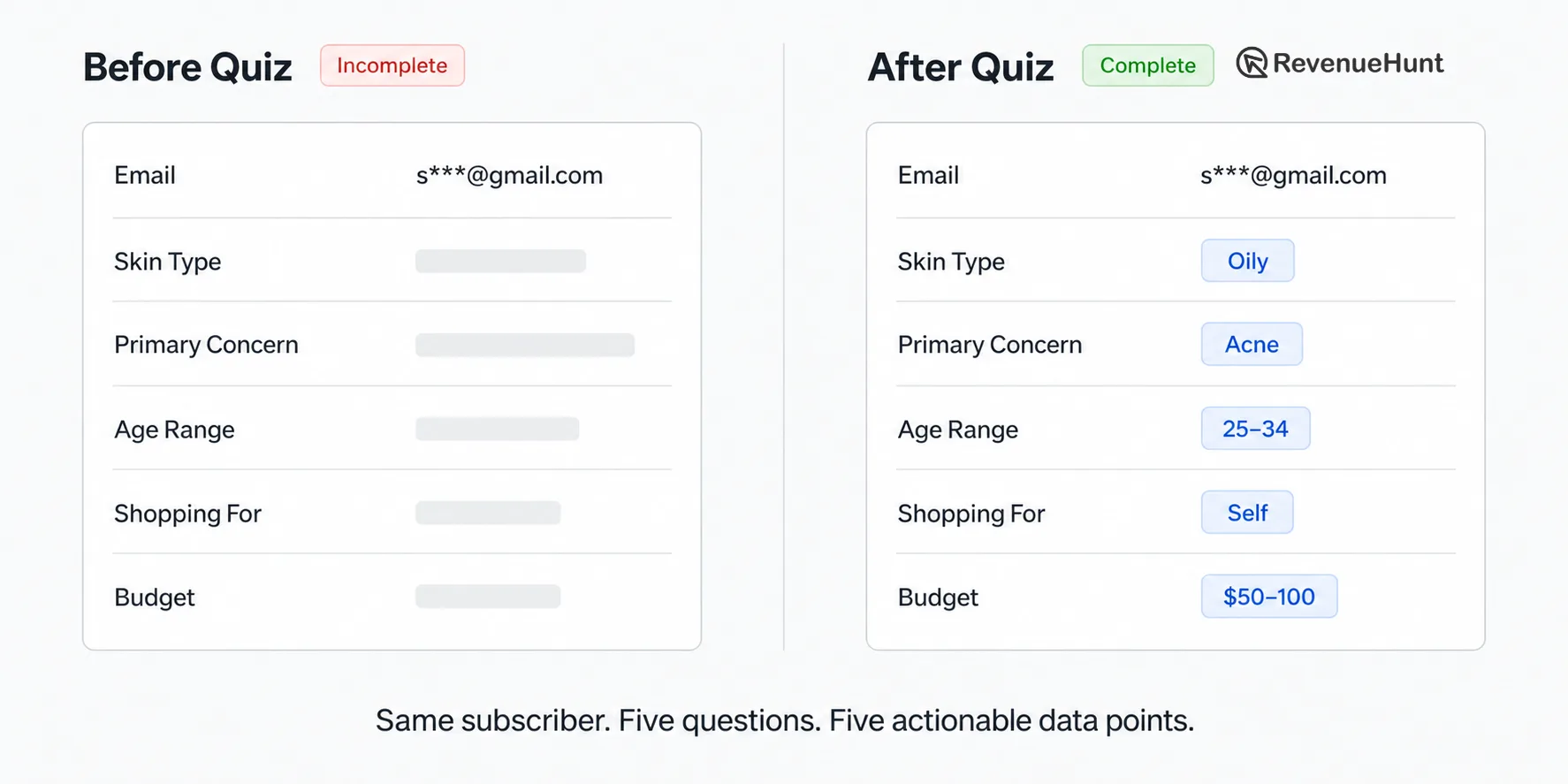
Fig. 02 Same subscriber, before and after a five-question quiz. Five properties, five segments you couldn't build yesterday.
Solution architecture: quiz to Klaviyo, end to end
The data-capture instrument
A product recommendation quiz built with RevenueHunt asks 3-7 diagnostic questions. As you build it, the one thing you name is a customer tag on each answer choice, the label you’ll segment on later. You never touch a field-mapping screen: on completion, RevenueHunt writes every answer, tag and recommended product to the Klaviyo profile as custom properties automatically.
| Quiz question | Answer | Customer tag you define |
|---|---|---|
| What’s your skin type? | Oily | Oily |
| What’s your primary concern? | Acne | Acne |
| What’s your age range? | 25-34 | 25-34 |
| Shopping for yourself or a gift? | A gift | Gift |
| What’s your budget? | $50-100 | $50-100 |
Under the hood, RevenueHunt creates the Klaviyo properties for you on the first sync: ANSWER_BY_BLOCK (the answers), RECOMMENDATIONS_BY_SLOT (the products it recommended), QUIZ_NAME, and a TAGS property carrying the tags above. You segment and filter flows on those; you never name a property by hand.
The native sync: the word that changes everything
RevenueHunt syncs these properties directly to Klaviyo profiles via native integration. No Zapier or webhooks you maintain. No CSV imports on a schedule and no middleware that introduces lag, breaks silently, or requires a separate subscription.
Connecting takes one screen. In the quiz’s Integrations tab, click Connect on the Klaviyo card, authorise through Klaviyo’s OAuth login, and the sync is live for that quiz (toggle it on for the others). Point the quiz’s email block at a single opt-in Klaviyo list and set the subscription status, so completions land subscribed with consent captured at submission. From then on, every completion enriches the matching profile (matched on email) in real time, and if a customer retakes the quiz the profile updates again. The full walkthrough, including the downloadable email template, is in the send leads to Klaviyo guide. This is the direct answer to every broken-integration story you’ve accumulated.
The segment unlock
Once those properties exist in Klaviyo, the segments you’ve been unable to build become trivially constructable. Within 5 minutes of the first quiz completions syncing:
quiz_skin_type = "oily"ANDquiz_primary_concern = "acne"→ acne-prone oily skinquiz_shopping_for = "gift"ANDquiz_budget = "$50-100"→ gift buyers, mid-rangequiz_primary_concern = "anti-aging"ANDquiz_age_range = "35-44"→ anti-ageing core demoquiz_skin_type = "sensitive"→ sensitive skin (the segment that’s been impossible until now)
The flow architecture revolution
With these properties in place, the flows you’ve wanted to build become buildable.
- Personalised welcome series. One flow entry point, conditional split on
quiz_primary_concern. Acne subscribers receive acne-focused content. Anti-ageing subscribers receive anti-ageing content. Same infrastructure, entirely differentiated journeys. - Replenishment reminder. The flow knows what to recommend for restocking based on the quiz-derived routine, not just the last product purchased. Anchored to the customer’s profile, not to whatever they happened to buy on sale.
- Win-back flow. References the customer’s original quiz answers. “Still struggling with oily skin? Here’s what’s new since your last purchase.” Personalisation grounded in what the customer told you, not what an algorithm inferred.
- Dynamic campaign content. Content blocks that swap product images and copy based on
quiz_skin_type. One email template, five personalised versions, the same send volume but exponentially more relevant.
These are exactly the flows the post-quiz follow-up playbook breaks down end to end: one universal results email plus five behaviour-triggered flows (cart abandonment, browse abandonment, replenishment, cross-sell, win-back), each filtered on the same quiz tags that just landed in these profiles.
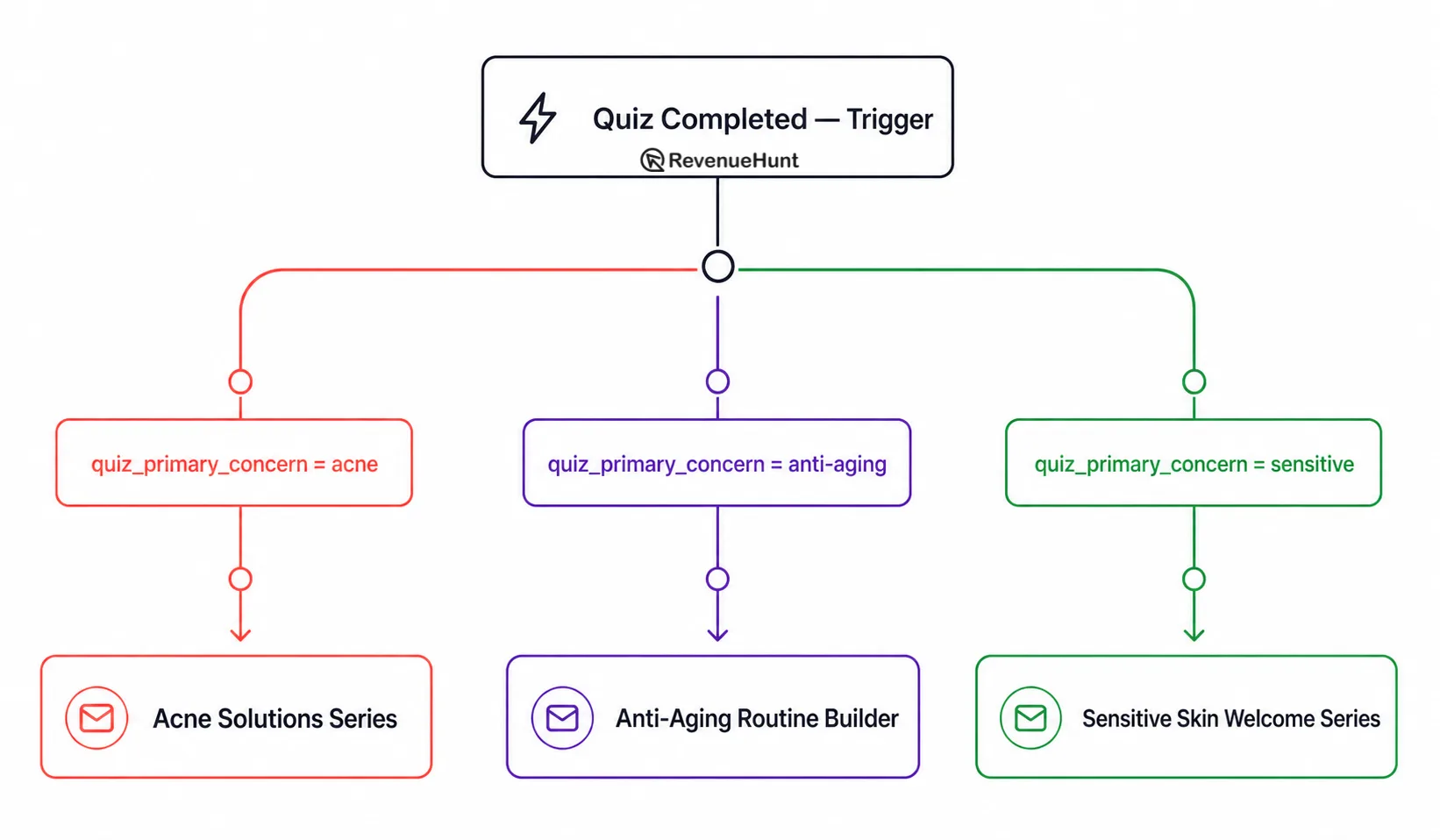
Fig. 03 13% of the list, 40%+ of email revenue. The only difference was the data inside the profiles.
The set-and-forget data pipeline
Once the quiz is live and the native Klaviyo connection is active, the enrichment pipeline runs continuously. Every new quiz completion enriches a Klaviyo profile automatically, without constant CSV exports or maintenance windows. The quiz works in the background 24 hours a day, feeding your account the intelligence your flows have been starving for.
Implementation: no dev ticket required
You build the quiz with RevenueHunt’s no-code drag-and-drop logic builder. Define the questions, tag each answer, and connect Klaviyo via one-click OAuth (RevenueHunt maps the properties for you). Total setup time using an industry-specific template (Skin Type Finder, Routine Builder, Wellness Goal Matcher): under 30 minutes. No dev agency or ticket queue. Data flows into Klaviyo the same day.
Before vs after: same Klaviyo account and flows, different data
| Before: generic list | After: quiz-enriched | |
|---|---|---|
| Campaign RPR | $0.06 | $0.22 (+267%) |
| Profiles | 60,000 | 8,000 enriched in 90 days |
| Custom properties per profile | 0 | 5 |
| Segmentation basis | Recency only | Skin type, concern, goal, budget |
| Flow personalisation | None | Conditional splits + dynamic content |
| Share of email revenue | Baseline | 40%+ from the enriched 13% |
Real-world proof: three enrichment scenarios
These are composite scenarios drawn from patterns observed across RevenueHunt deployments and anonymised retention-marketer conversations. Numbers reflect typical ranges observed when zero-party data lands in Klaviyo properties, not single-brand results.
Scenario 01: the RPR transformation
A skincare brand with 60,000 Klaviyo profiles, all captured via generic popup discount. Campaign RPR: $0.06. They launch a “Find your perfect routine” quiz with RevenueHunt, embedded on the homepage and used as the primary Meta ad landing page.
Over 90 days, 8,000 profiles are enriched with five custom properties each. The welcome series is rebuilt with conditional splits on quiz_primary_concern. Campaign sends use dynamic content blocks swapping images and copy based on quiz_skin_type.
RPR on quiz-enriched profiles: $0.22. The enriched segment is 13% of the list. It generates over 40% of email revenue. The math creates an immediate strategic imperative: enrich profiles faster.
Pattern: $0.06 RPR → $0.22 RPR on enriched profiles in 90 days.
Scenario 02: the hidden demand signal
A supplement brand has organised its entire email program around “energy” (the best-selling product category). All flows reference energy and all campaigns feature energy products. The assumption is that the audience is primarily energy-focused.
After launching a “What’s your wellness goal?” quiz, the quiz_primary_goal property populates across thousands of profiles. The data contradicts the assumption: 38% of respondents select “gut health”, a category the brand barely emails about.
A dedicated “Gut health journey” flow is created targeting this quiz segment. Within 60 days, it becomes the highest-performing flow in the account. The quiz revealed a demand signal completely invisible in purchase data.
Pattern: 38% of subscribers wanted gut-health content, invisible in all purchase data.
Scenario 03: the deliverability recovery
A beauty brand tracks their average open rate declining from 28% to 19% over 12 months. Standard diagnostics (list hygiene, sunset flow, domain warm-up) don’t reverse it. The root cause is structural: over-sending generic campaigns to a broad list that generates low engagement because the content isn’t relevant.
After enriching 12,000 profiles with quiz data and switching to segment-specific campaign sends, the engaged-segment open rate recovers to 31% within 90 days. Relevance improved deliverability. Deliverability improved revenue. The fix wasn’t in Klaviyo settings, it was in the data feeding Klaviyo.
Pattern: open rate 19% → 31% in 90 days. Same list, better data.
For a worked example of these mechanics in a single Shopify funnel, see the anti-ageing device case study (9.8% quiz-to-purchase CVR on cold Meta traffic, +42.64% AOV lift, $691K in 90 days, every quiz answer synced to Klaviyo for post-purchase segmentation).
Self-assessment: the Klaviyo data maturity model
Use this as a diagnostic. Run through it with your actual account open.
| Stage | Name | Data available | Segmentation basis | RPR signal |
|---|---|---|---|---|
| Stage 1 | The graveyard | Email + name only | Engagement recency only | Low and declining |
| Stage 2 | The guesswork | Email + purchase history | Behavioural inference | Stagnant |
| Stage 3 | The intelligence | Email + purchase + quiz data | Stated preference + behaviour | Jumping |
| Stage 4 | The engine | Stage 3 + predictive modelling | Self-optimising dynamic content | Top 5% DTC |
Where are you?
If you’re honest with yourself, 70%+ of Shopify brands sit at Stage 1 or Stage 2. Moving from Stage 1 to Stage 3 is achievable within 90 days. The quiz is the bridge: no platform migration, agency engagement or data warehouse required.
Why it failed before, and what’s different this time
If you’ve tried quiz-to-Klaviyo enrichment before and it didn’t stick, the tool was almost always the reason. Enterprise quiz platforms bury deep Klaviyo integration behind $200+/month pricing and a development implementation, too slow and too expensive to test before you scale. Mid-tier apps advertise the integration but deliver it poorly: tags sync inconsistently, property mapping is limited, and middleware introduces lag and silent failure points. The strategy didn’t fail. The implementation did.
The differentiator is not the quiz. It’s the native Klaviyo integration: one-click OAuth, real-time sync, no middleware, the answers and customer tags landing on the profile automatically, and a data flow reliable enough that you don’t check it weekly.
Case at a glance
| Problem | Klaviyo profiles captured via generic discount popup carry no preference data, so segments collapse to recency and broad sends erode deliverability over time. |
| Data pattern | Most lists are 60-80% never-purchasers; purchase history is a lagging indicator that misclassifies gift buyers and offers no signal on non-purchasers. |
| Solution | A 5-7 question product recommendation quiz mapping each answer to a Klaviyo custom property in real time via OAuth-native integration (no Zapier, no CSV imports, no middleware). |
| Properties captured | quiz_skin_type, quiz_primary_concern, quiz_age_range, quiz_shopping_for, quiz_budget, plus custom properties you define. |
| Time to first sync | Same day. Under 30 minutes with a template. No dev ticket. |
| Typical RPR pattern | $0.06 → $0.22 (+267%) on enriched profiles after 90 days. |
| Enriched-segment leverage | The enriched 13% of the list typically generates 40%+ of email revenue. |
| Open-rate recovery | 19% → 31% in 90 days once campaigns become segment-specific instead of broad. |
| Maturity model | Move Stage 1 (graveyard) → Stage 3 (intelligence) within one quarter. |
| Verified by | Built for Shopify RevenueHunt Analytics dashboard for revenue attribution; state of product recommendation quizzes for platform benchmarks. |
FAQ
Does this work without a quiz app’s native Klaviyo integration? Technically yes, via Zapier or webhook middleware, but the failure modes you’ve already encountered (inconsistent tag sync, properties that don’t map, brittle middleware) are the reason most retention marketers conclude quiz-to-Klaviyo enrichment doesn’t work. The native OAuth integration is the difference between a strategy that’s a clean pipeline and one that needs weekly babysitting. If your current quiz tool requires Zapier, that is the bottleneck.
What if my list already has 50K+ subscribers? Do I need to start over? No. You enrich forward. New quiz completions add custom properties to existing Klaviyo profiles (matching on email), so your historical engagement data, purchase history, and recency are preserved while the preference layer accumulates on top. Within 90 days, the enriched cohort typically becomes the highest-RPR segment in the account, even if it’s only 10-15% of the list.
How long until I see RPR change? First quiz completions sync to Klaviyo within seconds of launch. The properties become usable for segmentation immediately. The RPR delta is visible once you redirect a campaign or flow from broad-list send to enriched-segment send, which is typically within 2-3 weeks. The full +267% pattern observed across scenarios builds over 90 days as enrichment volume grows.
What if I’m on Klaviyo’s free plan? Custom properties and segments are available on the free plan. The constraint on free is sending volume (250 emails/month). You can enrich a list of any size on free, but to action the segments at scale you’ll need a paid plan. The properties remain attached to profiles regardless of plan tier.
Can I use this approach with Mailchimp/ActiveCampaign/Omnisend instead? Yes. The mechanics are identical: quiz answers map to platform-native custom properties via OAuth. RevenueHunt has native integrations for ActiveCampaign, Mailchimp, Omnisend, and HubSpot. The “graveyard” problem and the zero-party-data solution are platform-agnostic; this article uses Klaviyo because it’s the most common Shopify-first ESP.
Next steps
- Build the emails on top: the post-quiz follow-up playbook (one universal results email plus five lifecycle flows that compound the enriched profiles into repeat revenue).
- See the underlying mechanics in a real Shopify funnel: the anti-ageing device case study (9.8% CVR, $691K in 90 days, every answer synced to Klaviyo).
- Place this in strategic context: where Klaviyo activation fits in the retention pillar (the 10 strategies that compound LTV).
- Read the pillar argument on capture format: why popups are walls and quizzes are doors.
- Check the platform benchmark for what your segment should be doing: state of product recommendation quizzes.
- Estimate the impact on your own list with the quiz ROI calculator.
- Launch a quiz on Shopify (no code, native Klaviyo sync, free trial).
The graveyard doesn’t have to stay empty
Your Klaviyo account is only as powerful as the data inside it. Start feeding it zero-party data today.
- Launch a template today. Skin Type Finder, Routine Builder, or Wellness Goal Matcher, under 30 minutes from blank quiz to first synced profile.
- See the full mapping chain. Every answer becomes a property. Every property unlocks a segment. Every segment unlocks a flow. Every flow unlocks revenue.
- Run a controlled experiment. Pick one product category, 30 days, compare quiz-enriched RPR against your generic list. Let the data make the case.
No code required. Native Klaviyo sync. Data flows the same day you launch.
Your list is a graveyard. The quiz is the resurrection.
Free tools & data
Put these benchmarks to work on your own store.
Free tool
Quiz ROI calculator
Estimate the extra revenue and ROI a product recommendation quiz could add to your store. Built on real data, no email required.
Calculate your ROIFree report
Ecommerce quiz benchmark report
How product recommendation quizzes really perform: conversion by category, AOV uplift, and completion, from 45M+ real quiz responses.
Read the report
Most shoppers leave because they can't find the right product