
11 ecommerce sales funnel examples that convert in 2026
11 ecommerce sales funnel examples from real Shopify stores and DTC brands, plus the funnel stages that drove the results and how to build your own.
An ecommerce sales funnel isn’t a generic marketing flowchart with “TOFU/MOFU/BOFU” labels. It’s the specific sequence of pages, prompts and personalisation a shopper actually moves through between landing on your store and re-ordering for the third time. The brands that win in 2026 design that sequence as a single coherent product, not a stack of disconnected popups and email blasts. The fastest way to absorb the principle is to look at 11 funnels that already do it well, then steal the mechanics you don’t yet have.
This guide walks through 11 ecommerce sales funnel examples (seven well-known DTC brands and four real RevenueHunt customers), the specific mechanics that make each one convert, the funnel stages that drove the results, and how to assemble your own quiz funnel using a free template. Most of the funnels below are quiz-led; for the category overview (the five quiz formats and how they differ) see the umbrella guide. To estimate the lift on your own store, use our quiz ROI calculator.
What you'll learn
- →How seven landmark DTC brands (Function of Beauty, HUM, Stitch Fix, Trade Coffee, Warby Parker, Casper, Birchbox) actually structure their funnels.
- →Four real RevenueHunt customer funnels with disclosed metrics (including +42.64% AOV / $691K in 90 days on cold Meta).
- →The five-stage funnel model (AIDA plus retention) that all 11 examples share, and where most stores leak.
- →How to replicate any of these patterns on Shopify in under an hour with a no-code quiz template.
- →Which five funnel-performance metrics to track instead of vanity traffic numbers.
How we picked these examples
Every funnel below meets three criteria: (1) the brand is currently operating it in production (no archived case studies); (2) the funnel mechanic is documented either through public observation or, for our own customers, with specific disclosed metrics; (3) the design pattern is replicable on Shopify or Shopify Plus by a team without a dedicated growth engineer. We left out funnels that depend on proprietary tech, undisclosed paid-media spend or contractual exclusivities, because those examples don’t help anyone build.
Where the result is disclosed publicly (case studies, podcast interviews, investor decks) we cite the figure. Where it isn’t, we say so. We’ve also flagged the four RevenueHunt customer examples explicitly so you can distinguish documented case studies from public-observation reviews.
The 11 funnels worth studying
| # | Brand | Category | Funnel mechanic | Disclosed result |
|---|---|---|---|---|
| 1 | Function of Beauty | Hair care | Quiz-as-storefront, 6-8 questions to a custom-formula bottle | Reached unicorn valuation in 2020 (quiz cited as primary driver) |
| 2 | HUM Nutrition | Supplements | 3-minute diagnostic to personalised nutrition report + subscription | Quiz cited as primary acquisition channel; specific CVR not disclosed |
| 3 | Stitch Fix | Apparel | 15-question style profile feeding algorithm + human stylist box | IPO 2017 at $1.6B valuation, personalisation flywheel as core thesis |
| 4 | Trade Coffee | Specialty coffee | Taste-profile quiz matching 50+ roasters into flexible subscription | Quiz cited as primary acquisition and retention lever |
| 5 | Warby Parker | Eyewear | Originally home try-on, now AR virtual try-on | IPO 2021 at $6B+ market cap; original try-on cited as highest-converting flow |
| 6 | Casper | Mattresses | Sleep-education quiz + single mattress rec + 100-night trial | $1.1B valuation pre-IPO; specific CVR not disclosed |
| 7 | Birchbox | Beauty samples | Beauty profile to monthly curated box, full-size reorder loop | 2.5M+ subscribers at peak; churn dropped after per-sample feedback step |
| 8 | Skinology (RevenueHunt) | Luxury skincare | Multi-step diagnostic to 3-5 product routine, native Klaviyo sync | Significantly higher AOV from quiz traffic (case study) |
| 9 | Daughterela (RevenueHunt) | Multi-category beauty | Branching quiz into 3 sub-catalogues; quiz-tagged Shopify orders | Substantial AOV and email engagement uplift (case study) |
| 10 | Anti-ageing device brand (RevenueHunt) | Beauty devices | Qualifying funnel: 7 questions + 5 persuasion screens, cold Meta to results | +42.64% AOV, $691K in 90 days, 9.8% CVR on cold traffic (case study) |
| 11 | Extreme Kids World (RevenueHunt) | Outdoor play | Configurator quiz on yard / age / budget to 3-4 matched products | Significantly higher conversion vs catalogue traffic (case study) |
1. Function of Beauty: the prototypical quiz funnel

Fig. 01 Function of Beauty's hair quiz: a 5-minute consultation that produces a personalised formula. Hair type, concerns, goals and scent preferences feed both the recommendation and the post-quiz email sequence.
What makes it work. Function of Beauty turned a quiz into the entire storefront. There is no “shop all” you can browse to before answering the questions. The hair-profile quiz is the homepage, and the result is the product. By eliminating the choice paralysis of a traditional catalogue, the brand converts a higher percentage of first-time visitors and collects deep zero-party data on every shopper at the same time.
The funnel mechanic. Six-to-eight diagnostic questions (hair type, goals, scent preferences, colour) generate a “formula” that’s visualised as a custom bottle with the customer’s name on it. The output page acts as the product detail page: add-to-cart, subscription option, complementary upsells, and a results-shareable URL all live on the same screen. The combination of personalisation and visible craft (a labelled bottle) creates an ownership effect that lifts AOV.
Reported result. Function of Beauty’s quiz-driven model contributed to the company reaching unicorn-status valuation in 2020, with reporting that the quiz was the primary conversion driver. The brand has not disclosed quiz-completion-to-purchase rates publicly.
2. HUM Nutrition: the 3-minute supplement diagnostic

Fig. 02 HUM Nutrition's nutrition quiz: a clinical-style intake that asks about lifestyle, sleep, energy and skin concerns. The quiz routes to a personalised supplement protocol that feels prescribed rather than picked.
What makes it work. HUM Nutrition compresses what would otherwise be a 45-minute supplement consultation into a 3-minute on-site quiz that produces a personalised nutrition report. The quiz output is positioned as a clinical-style diagnostic rather than a marketing funnel, which converts the sceptical buyer the supplements category has traditionally struggled to win.
The funnel mechanic. A multi-step quiz captures goals and concerns (skin, energy, gut, mood, sleep, hair) and lifestyle inputs (diet, stress, sleep duration). The results page delivers a “personalised nutrition report” with a recommended bundle of products and a clear value layer (“Build Routine + $10 OFF”). The subscription path is the default with “Save 30% on every order” baked into the price; free unlimited access to a registered dietitian is included as the trust-builder that closes hesitant shoppers.
Reported result. HUM has cited the quiz-driven funnel as a primary acquisition channel and is consistently named among the top-rated supplement brands in DTC coverage. Quiz-completion-to-purchase rates have not been disclosed publicly.
3. Stitch Fix: the style-profile funnel for high-AOV apparel
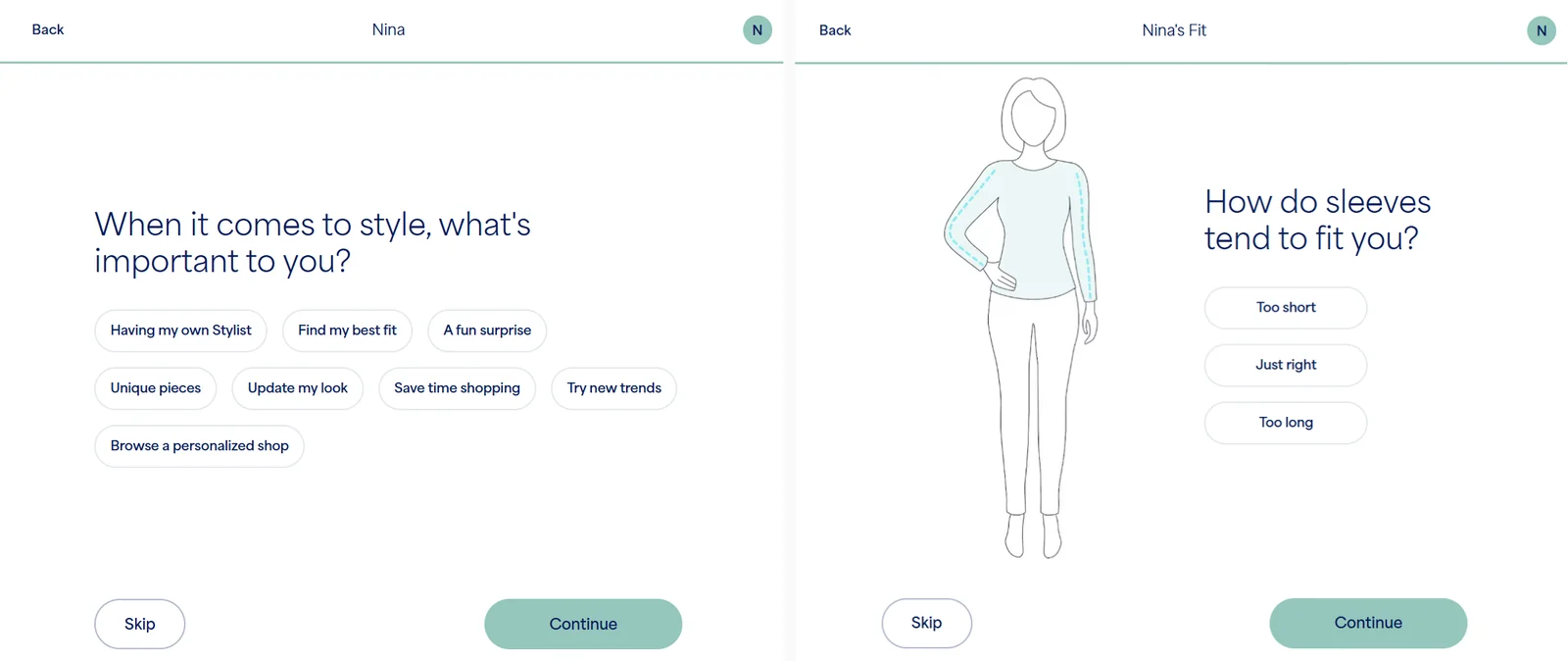
Fig. 03 Stitch Fix's style profile: a long-form quiz that captures size, fit, style preferences and budget. The quiz is the entire funnel — the recommendation is delivered by a human stylist reading the profile.
What makes it work. Apparel has the worst returns problem in DTC. Stitch Fix solved it by collecting structured style preferences and physical sizing inside a 15-question profile, then routing the data to a hybrid algorithm-plus-human-stylist that selects the shipped items. Customers receive five hand-picked items in a box, try them at home, and pay only for what they keep.
The funnel mechanic. Style profile (preferences, sizing, lifestyle, budget) feeds the recommendation engine, with the brand’s “StyleFile” feature mapping shoppers onto five style archetypes; a human stylist reviews the algorithm’s picks; the box ships with five items; the customer keeps and pays for what they want and returns the rest with free shipping both ways (a $20 styling fee is credited toward any purchase). Each return-with-notes interaction enriches the customer’s style profile for next time. This compounds: the more boxes a customer receives, the better the recommendations get, the higher the keep rate.
Reported result. Stitch Fix went public in 2017 at a $1.6B valuation. The compounding-personalisation flywheel was the central thesis of the IPO prospectus.
4. Trade Coffee: the taste-profile match funnel
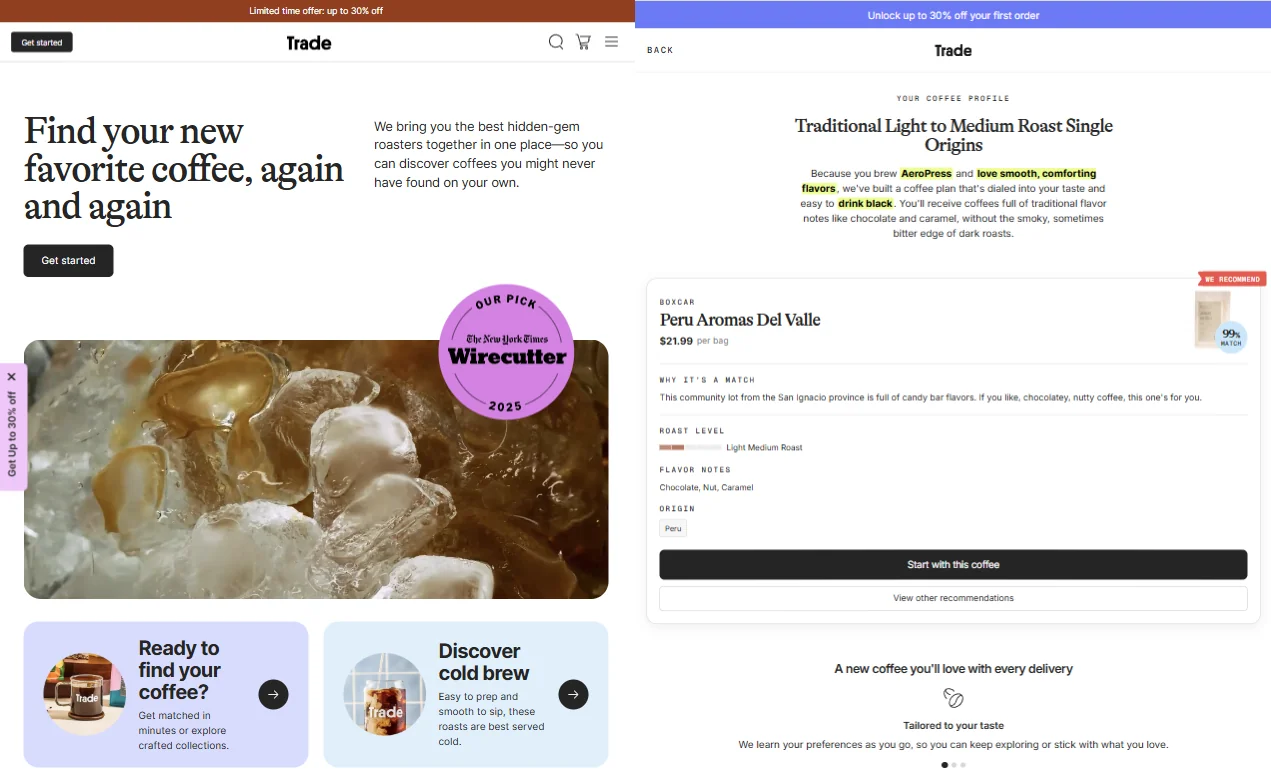
Fig. 04 Trade Coffee's taste-profile quiz: 7 questions on brewing method, roast preference, flavour profile and frequency. The quiz drives both the first match and per-bag re-recommendations across the subscription lifecycle.
What makes it work. Trade Coffee operates a marketplace of 50+ independent roasters and uses a taste-profile quiz to solve the classic specialty-coffee discovery problem: shoppers can’t tell from a product page whether they’ll like a particular roast. The quiz collapses days of trial-and-error into a single match, and the value layer (a roaster sourcing curation the shopper couldn’t replicate themselves) keeps the subscription sticky.
The funnel mechanic. Quiz captures brew method (drip, espresso, pour-over, cold brew), roast preference, flavour direction (balanced, fruity, bold), milk or black, and frequency. The results page recommends a specific coffee from one of Trade’s partner roasters with rationale for the match, and routes the shopper into a flexible subscription (weekly to monthly cadence, skip-anytime). Subsequent shipments re-run the matching algorithm with feedback signals from the customer’s previous-bag ratings.
Reported result. Trade Coffee has cited the quiz as the primary acquisition funnel and the subscription’s main retention lever. The brand is currently operating across the US (Seed Leaf Inc., 2026).
5. Warby Parker: from home try-on to virtual try-on

Fig. 05 Warby Parker's funnel: face shape and style preferences route to a curated 5-pairs home-try-on set. The free try-on removes the friction of guessing; the quiz makes the curation feel personal, not random.
What makes it work. Eyewear has even higher return friction than apparel: fit is hyper-personal and customers cannot judge it from a photo. Warby Parker turned the “try-before-you-buy” mechanic into the funnel itself, and the model defined the category for more than a decade. The brand has since retired the mail-out Home Try-On program in favour of a virtual approach (covered below), but the results the original funnel produced are what built the company, and the mechanic is still worth studying because it remains directly replicable for any category with high fit anxiety.
The original funnel mechanic. Customer browsed or filtered the catalogue and added up to five frames to a free Home Try-On cart; the box shipped at no charge; the customer tried the frames at home with a prepaid return label included; they returned the box and then placed the real order online for their chosen frame. The data collected during try-on (which frames the customer kept, photographed, asked friends about) fed the next-best-recommendation engine for follow-up emails. Note: Warby Parker has discontinued the physical Home Try-On program; the historical case-study results below were generated while it was active.
Reported result. Warby Parker IPO’d in 2021 at a $6B+ market cap; the Home Try-On funnel was consistently cited as the highest-converting flow in the company throughout its growth phase.
What replaced it. The brand now runs a Virtual Try-On experience powered by a camera-based AR overlay: shoppers point their phone at their face, see the frame rendered on themselves in real time, and add to cart without ever leaving the site. It compresses what was a five-day mail cycle into a five-second on-page interaction, which lowers acquisition friction at the cost of the data-collection depth the old box used to produce. The lesson for funnel design: the purpose of the original mechanic (resolving fit uncertainty before purchase) outlasts any specific implementation, and the next implementation can be radically cheaper to operate.
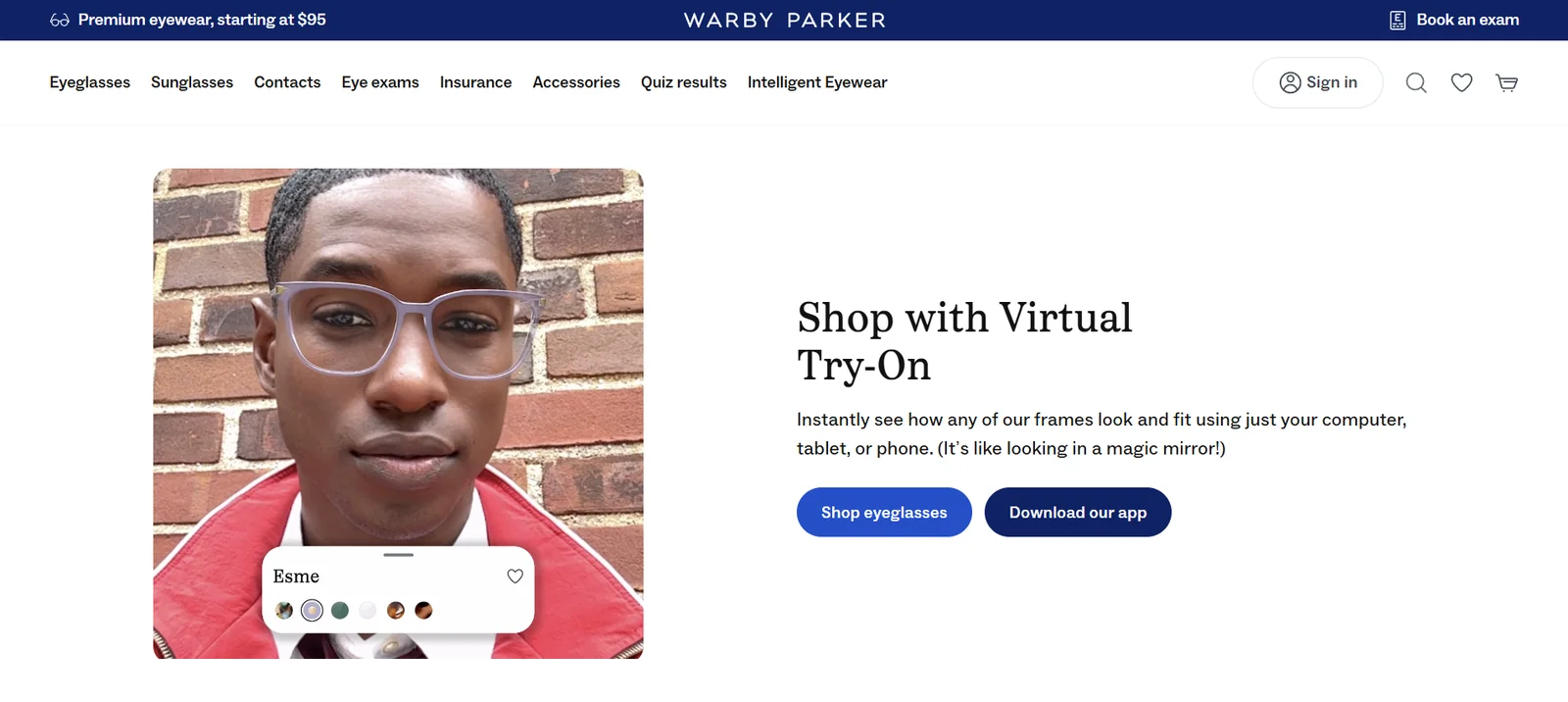
Fig. 06 Warby Parker's AR virtual try-on: once the quiz narrows the frame set, the try-on closes the visual uncertainty. The combination of curation + try-on removes the two biggest objections to buying eyewear online.
6. Casper: the sleep-education funnel
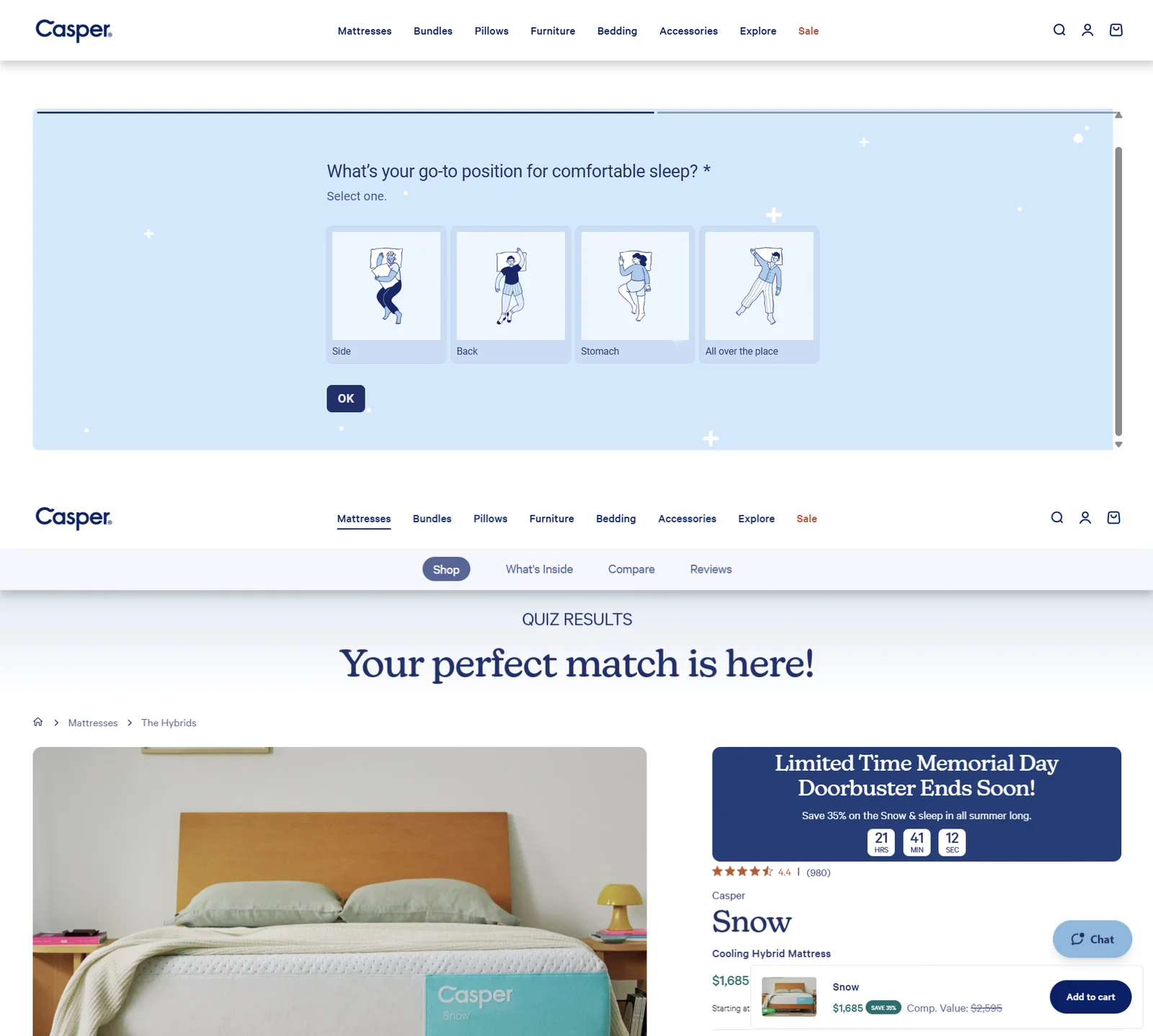
Fig. 07 Casper's sleep quiz: sleep position, partner habits, body temperature and mattress age route to a specific bed-in-a-box recommendation. The quiz turns a high-consideration purchase into a 3-minute consultation.
What makes it work. Mattresses are a once-every-eight-years purchase. The funnel needs to compress what would normally be hours of research into a decision a shopper can make on a single visit. Casper built an education-led funnel: the quiz is framed as “find your perfect mattress” but actually walks the customer through the trade-offs (firmness, sleep position, materials) so they reach the result with confidence.
The funnel mechanic. Multi-step questionnaire covering sleep position, partner disturbance tolerance, firmness preference, hot-sleeping, body type and budget. The output page is a single mattress recommendation with an explanation of why this model fits the inputs. Risk reversal (100-night trial, free return) sits next to the add-to-cart, and a stretched-financing option drops the perceived price barrier.
Reported result. Casper reached a $1.1B valuation pre-IPO. The brand has not publicly disclosed quiz-completion-to-purchase rates.
7. Birchbox: the beauty-profile subscription funnel
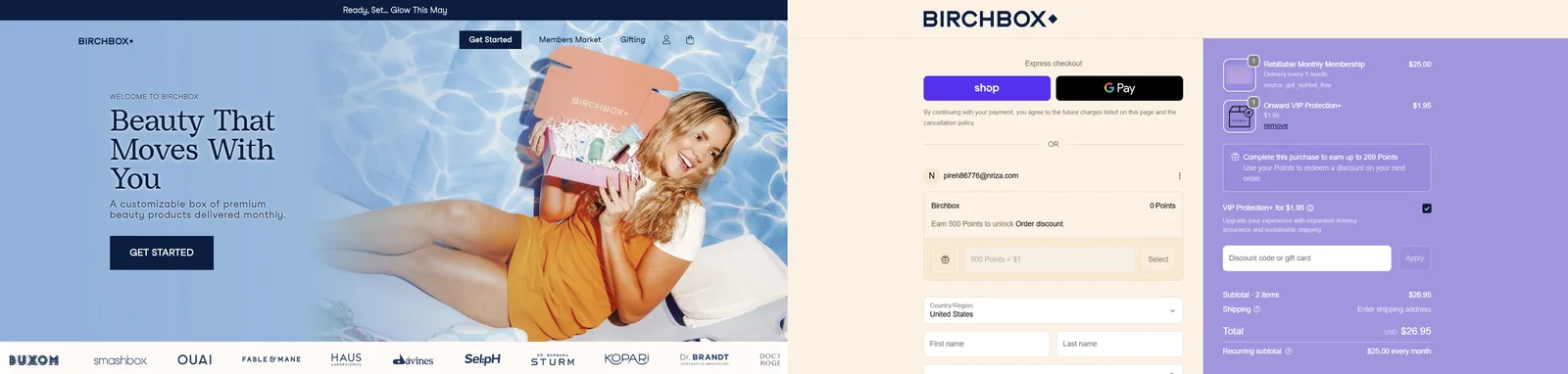
Fig. 08 Birchbox's beauty profile: a long-form quiz that personalises the contents of each monthly box. The profile is the product; the box is just delivery.
What makes it work. Birchbox pioneered the beauty subscription category by inverting the discovery funnel. Instead of asking the customer to find products they like, the customer fills in a beauty profile and Birchbox sends a curated monthly box of samples. Customers buy full-sized versions of the samples they liked at checkout, which closes the loop on a $15/month subscription that produces 5x to 10x AOV in attached sales.
The funnel mechanic. Profile quiz (hair, skin, scent, treatment goals); monthly box of five samples; in-box card with each sample’s full-size price; one-click reorder of full sizes from the customer’s account. The profile enriches with feedback after each box (love/like/skip), and the curation algorithm tightens over time.
Reported result. Birchbox reached 2.5M+ subscribers at peak and was acquired by FemTec Health in 2021. Subscription churn dropped meaningfully after the brand added the “feedback per sample” step to the funnel.
8. Skinology (former RevenueHunt customer): luxury skincare via personalisation
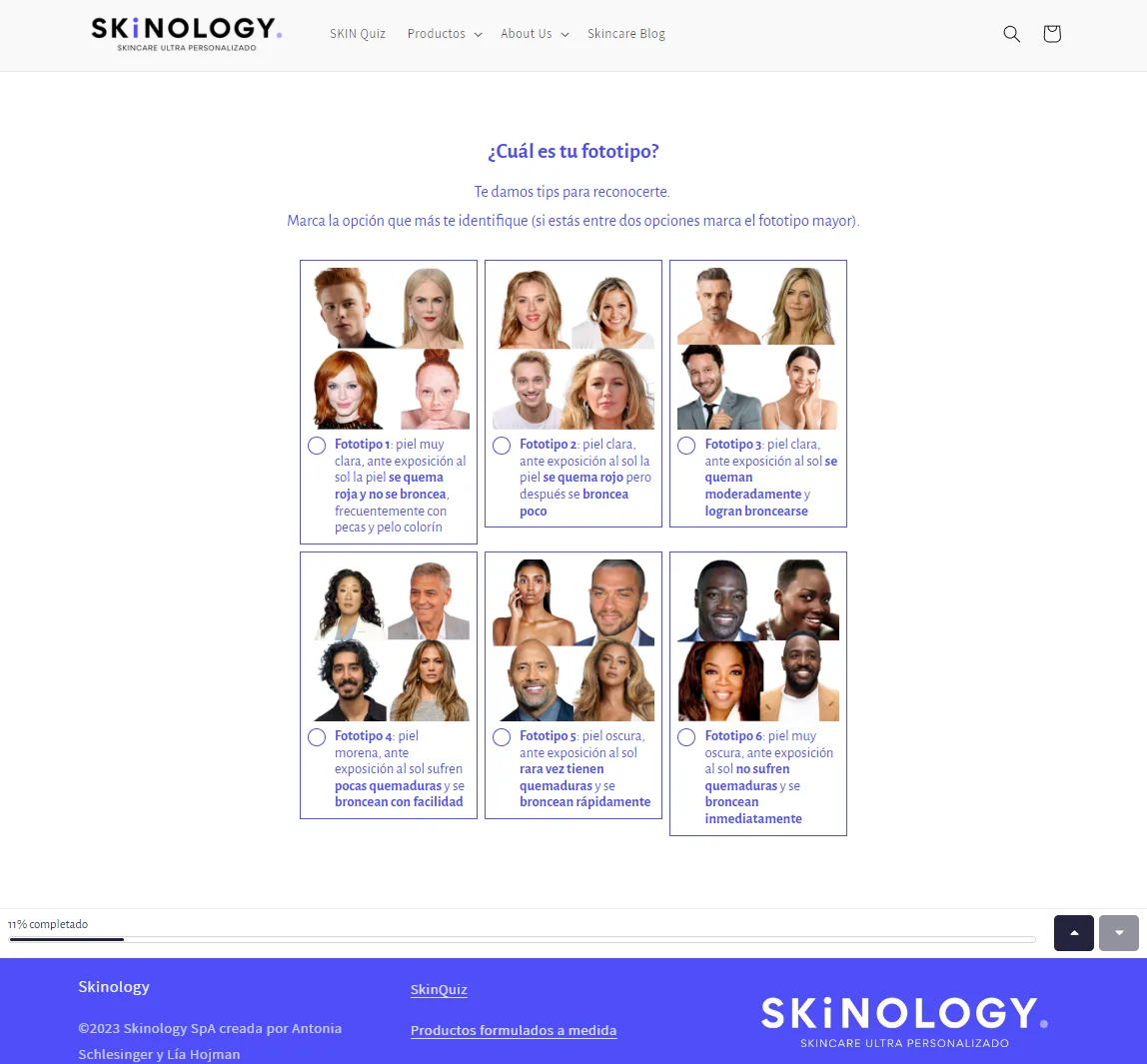
Fig. 09 Skinology's consultation quiz: AI plus dermatologist review produces a personalised skincare regimen. Combines algorithmic routing with human expertise as the closing signal.
What makes it work. Skinology sells high-ticket skincare in a category where shoppers are extremely cautious about choosing the wrong product. The brand uses a multi-step diagnostic quiz to play the role a clinic dermatologist would play, walking the customer through skin type, concerns, sensitivities and treatment goals before recommending a personalised routine. Note: Skinology was on RevenueHunt during the period that produced the case-study results below; they have since moved to a custom-built quiz on the same mechanical pattern.
The funnel mechanic. A multi-step diagnostic quiz captures structured zero-party data on each shopper, displays a routine of three to five products with the rationale per product, and routes the contact and preferences directly into the brand’s email platform. The follow-up flow references the customer’s quiz answers explicitly in subject lines and body copy. The pattern is replicable on any modern quiz tool with native ESP integration; Skinology originally ran it on RevenueHunt’s builder with the native Shopify and Klaviyo connections, and has since rebuilt the same flow in-house.
Reported result. Skinology reported significantly higher AOV from quiz-driven traffic than from category-page traffic during the period covered by the case study, with sustained conversion from the personalised email sequence. The full case study is here: Skinology and the personalised skincare journey.
9. Daughterela (RevenueHunt customer): natural-beauty discovery

Fig. 10 Daughterela's beauty finder: a short quiz on routine, skin goals and ingredient preferences routes to a personalised natural-beauty kit. The product set rotates seasonally; the profile carries forward.
What makes it work. Daughterela’s catalogue spans skincare, makeup and wellness, which produces classic discovery friction: shoppers don’t know where to start. The brand built a “personal beauty consultant” funnel that uses a quiz at the top of the funnel to route shoppers into one of three sub-catalogues (skincare, makeup, supplements), then layers preference data on top to recommend specific products within each sub-catalogue.
The funnel mechanic. Quiz with branching logic (skincare path vs makeup path vs wellness path) collects zero-party data (skin type, undertone, treatment goal, sustainability priority); results page shows a tailored routine; email follow-up uses the routine as the personalised reference. Shopify Orders are tagged with quiz answers so the post-purchase experience continues the personalisation. For the underlying mechanics, see our zero-party data guide.
Reported result. Daughterela has reported substantial uplift in average order value and email engagement from the quiz funnel relative to baseline traffic. The full case study is here: Daughterela redefining natural beauty.
10. Anti-ageing device brand (RevenueHunt customer): the qualifying funnel
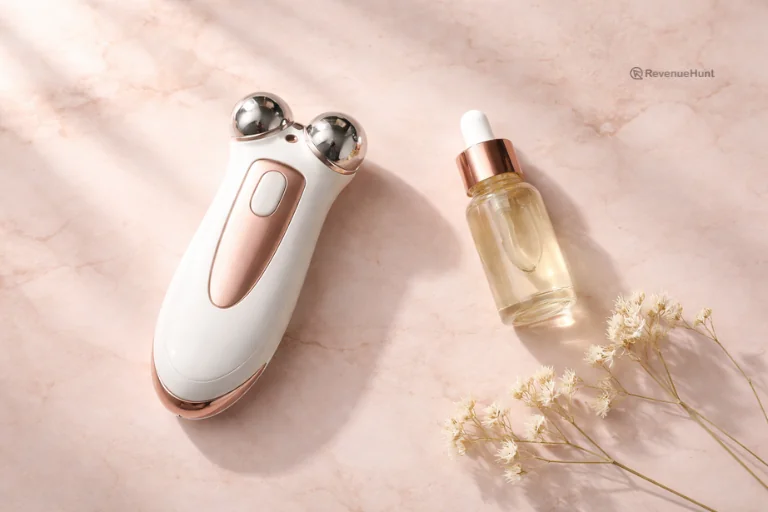
Fig. 11 The hero product photography from the anti-ageing brand case study: a device + serum kit at $107 AOV. The quiz routes to this kit as the canonical first purchase.
What makes it work. This US anti-ageing device brand sells high-ticket items (a microcurrent facial device plus a complementary serum) where unqualified traffic produces a low conversion rate and high refund risk. The team built a qualifying funnel: instead of trying to convert every visitor, the quiz screens shoppers by skin concern, age range, treatment history and willingness-to-invest, then surfaces the right product (and the right messaging) only to qualified shoppers.
The funnel mechanic. Qualification quiz with treatment-history branching; results page customised to each qualified segment; native sync to Klaviyo with quiz answers as custom properties powering segment-specific welcome, replenishment and consultation-booking flows. The disqualified traffic gets nurture content instead of the hard sell, preserving brand goodwill.
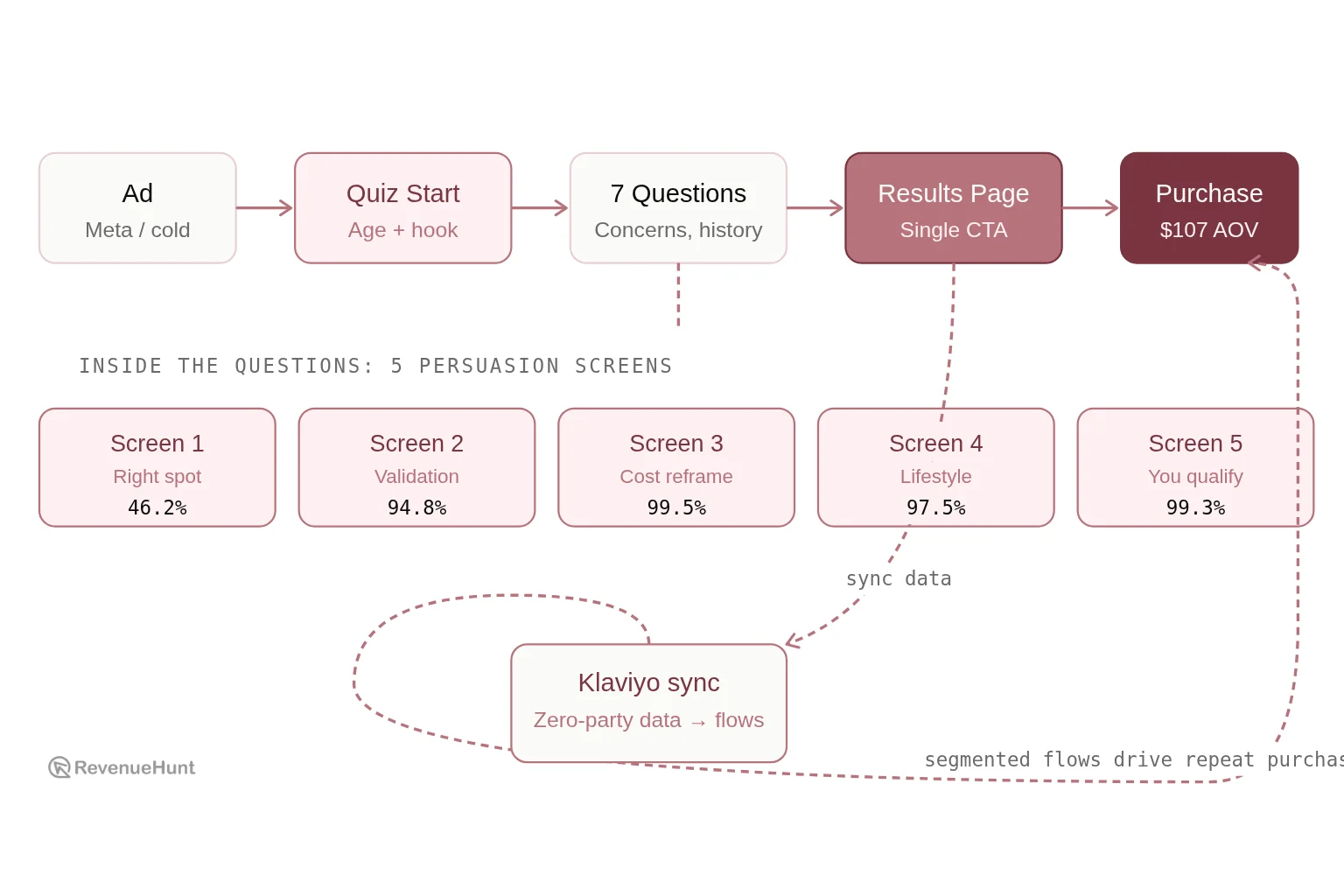
Fig. 12 The anti-ageing brand's seven-question funnel: cold Meta ad → quiz entry → five embedded persuasion screens between questions → results-page purchase at $107 AOV → Klaviyo segmentation driving repeat purchases. The persuasion-screen pattern is what produces the 9.8% CVR.
The diagram above maps the end-to-end mechanic. The cold Meta ad clicks into the quiz, seven questions cover concerns and history, and inside those questions sit five micro-screens that do the persuasion work: right spot (46.2% pass through), validation (94.8%), cost reframe (99.5%), lifestyle (97.5%) and you qualify (99.3%). The hard filter is the first screen; the four that follow assume the shopper is qualified and shift the work from screening to converting. The shopper hits a results page with a single CTA, lands on the $107 AOV purchase, and the zero-party data from every quiz answer syncs to Klaviyo where segmented flows drive the repeat-purchase loop.
Reported result. +42.64% AOV lift, $691K in attributed revenue, and 9.8% quiz-to-purchase CVR on cold Meta traffic in 90 days. Full breakdown: the anti-ageing device case study.
11. Extreme Kids World (RevenueHunt customer): the configurator funnel
Fig. 13 Extreme Kids World's configurator: a niche quiz that walks parents through age, sport, skill level and equipment specifics. 76.9% completion rate with a $3K AOV from the resulting custom build.
What makes it work. Extreme Kids World sells outdoor play structures (playhouses, climbing frames, cargo nets). Each customer’s purchase depends on yard size, child age range, durability requirement and budget. The brand built a configurator-style funnel that walks parents through these constraints before showing matching products, instead of letting them browse a vast catalogue of partially-suitable options.
The funnel mechanic. Configurator quiz (age range, yard space, terrain, durability needs, budget); each answer narrows the recommended product set; the results page shows a compact set of three to four matches with clear rationale; post-quiz email captures the lead and routes high-intent traffic to a follow-up consultation.
Reported result. Extreme Kids World reports a significantly higher conversion rate from quiz traffic versus catalogue traffic, and shorter sales cycles on high-ticket items. Full case study: Extreme Kids World leading interactive personalisation.
Funnel stages that drove these results
Across all 11 examples, the same five-stage structure shows up. It’s a deliberate evolution of the classic AIDA model (Attention → Interest → Desire → Action) with a fifth stage that’s become the difference between a one-time-purchase business and a brand:
Stage 1: Attention. Top-of-funnel acquisition that doesn’t waste signal. The strongest funnels above (Function of Beauty, HUM Nutrition, the anti-ageing device brand) use paid ads, content and landing pages that point directly at the quiz, not at the catalogue. The cost-per-quiz-start is the real top-of-funnel metric; cost-per-visit is a vanity number that hides funnel-quality differences.
Stage 2: Interest. This is where the quiz lives. The job here is to convert a passing shopper into an actively engaged participant by offering a clear value exchange: “answer five questions, get a recommendation tailored to you.” Completion rates of 40 to 60% on well-designed quizzes are normal in 2026; that’s the rate that compounds downstream. Every quiz answer is structured first-party data that powers Stage 4 and Stage 5. For a deeper look at the data category, see our first-party data guide.
Stage 3: Desire. The results page. This is the most under-engineered stage in most funnels: brands invest in the quiz then dump the customer on a generic product page. The funnels above treat the results page as a bespoke product detail page: the customer’s name or stated preference is referenced, the rationale per recommendation is visible, social proof is anchored to the shopper’s segment (not generic store-wide reviews), and the cart includes intelligent cross-sells based on the quiz answers.
Stage 4: Action. Checkout and the immediate post-checkout window. The strongest funnels reduce friction (express checkout, accelerated payment, single-step shipping selection) and immediately enrich the customer’s profile in the ESP and CRM with the quiz answers. This is the boundary where on-site data flows downstream into every other channel.
Stage 5: Retention. The stage that AIDA misses entirely. Every funnel above runs a post-purchase sequence that references the customer’s quiz answers (not just their order history) inside replenishment, win-back, cross-sell and educational content. This is where a one-time purchase becomes lifetime value, and it’s the stage that separates the brands that compound from the brands that have to re-acquire every customer.
How to build your own (free template)
Every quiz-driven funnel above can be replicated on Shopify in under an hour using an industry-specific template. Launch a quiz on Shopify (no code, free trial), browse the library of ready-made quiz templates (skin type finder, routine builder, wellness goal matcher, supplement diagnostic, eyewear fit, sleep quiz and more), wire up the native Klaviyo, Omnisend or Mailchimp connection, and the funnel is live the same day. The free plan covers most stores up to their first thousand quiz completions, which is enough to validate the model before committing to anything.
For the strategy behind the build (the five funnel stages, the design choices that determine whether a funnel compounds or stalls, and the apps that fit each stage), see our step-by-step funnel build guide.
Frequently asked questions
What is an ecommerce sales funnel?
An ecommerce sales funnel is the specific sequence of pages, prompts and personalisation a shopper moves through between landing on your store and re-ordering. Unlike a generic marketing funnel, an ecommerce funnel is anchored in product pages, checkout, post-purchase emails and lifecycle flows, and is typically measured on attached metrics like AOV, repeat-purchase rate and customer LTV rather than awareness metrics.
What stages does an ecommerce sales funnel have?
The classic four-stage AIDA model (Attention, Interest, Desire, Action) covers acquisition through conversion. In 2026, the strongest ecommerce funnels add a fifth retention stage that powers post-purchase emails, replenishment and lifetime-value mechanics with the data collected during Stages 2 and 3.
What is the highest-converting type of ecommerce funnel?
Across the 11 examples above, quiz-driven funnels consistently outperform catalogue-only funnels on conversion rate, AOV and email RPR. The reason is structural: the quiz collects explicit preference data that powers personalised recommendations and personalised retention flows, which compound across the customer lifetime.
How long should an ecommerce funnel quiz be?
Three to seven diagnostic questions is the sweet spot for most categories. Fewer than three rarely produces enough structured data to differentiate recommendations; more than seven produces diminishing returns on completion rate. Function of Beauty (6 to 8) and Stitch Fix (15) sit on the longer end because the perceived value of the recommendation is high enough to justify the time.
Can I build a quiz funnel on Shopify without code?
Yes. RevenueHunt’s quiz builder is no-code, with industry-specific templates and native integrations with Klaviyo, Omnisend, Mailchimp, Meta Custom Audiences, Google Customer Match and Shopify Orders. Most stores launch in under an hour.
Are these examples Shopify-only?
Not all of them. Most of the DTC brands above run on a mix of Shopify (Shopify Plus for the larger ones) and headless commerce stacks. The RevenueHunt customer examples are all Shopify stores. The funnel patterns are replicable on any platform that supports custom checkout and a connected ESP.
How do I track ecommerce funnel performance?
Track quiz-start rate, quiz-completion rate, completion-to-add-to-cart rate, AOV on quiz-attributed orders versus baseline orders, email RPR on quiz-enriched profiles versus unenriched, and 90-day repeat-purchase rate. These five metrics will tell you which funnel stage is leaking and where the next investment should go.
Where can I find more case studies?
Our case study collection covers RevenueHunt customers across skincare, supplements, apparel, beauty and outdoor categories. Each case study includes the funnel mechanic, the metrics, and the implementation timeline.
Free tools & data
Put these benchmarks to work on your own store.
Free tool
Quiz ROI calculator
Estimate the extra revenue and ROI a product recommendation quiz could add to your store. Built on real data, no email required.
Calculate your ROIFree report
Ecommerce quiz benchmark report
How product recommendation quizzes really perform: conversion by category, AOV uplift, and completion, from 45M+ real quiz responses.
Read the report
Most shoppers leave because they can't find the right product